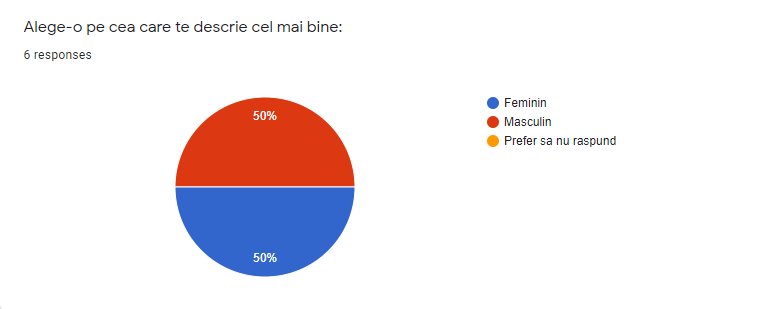
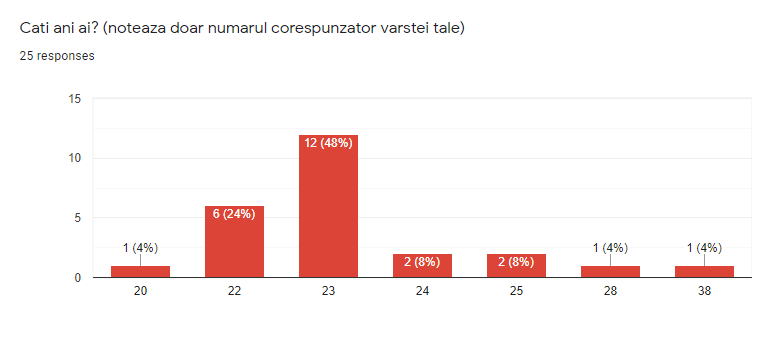
19 Oct
Project Description
This section offers an overview of our project: UndeStudiem.

This section offers an overview of our project: UndeStudiem.
This section offers an overview of our project regarding the problem and solution validation step
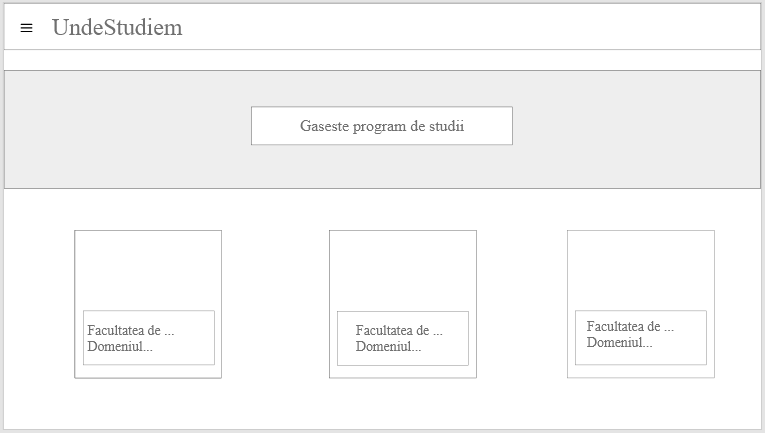
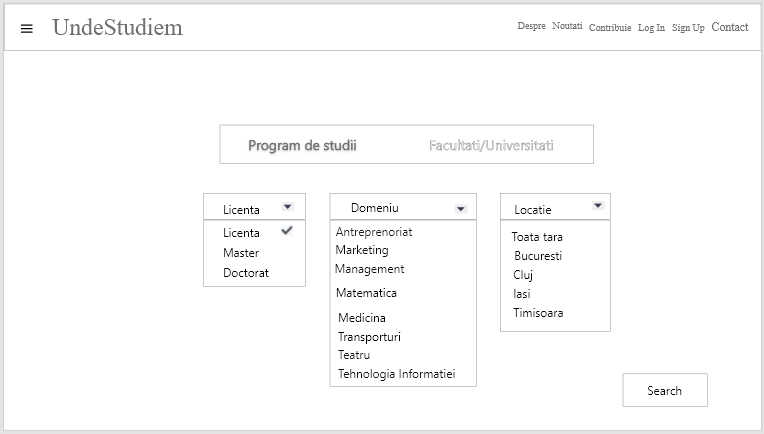
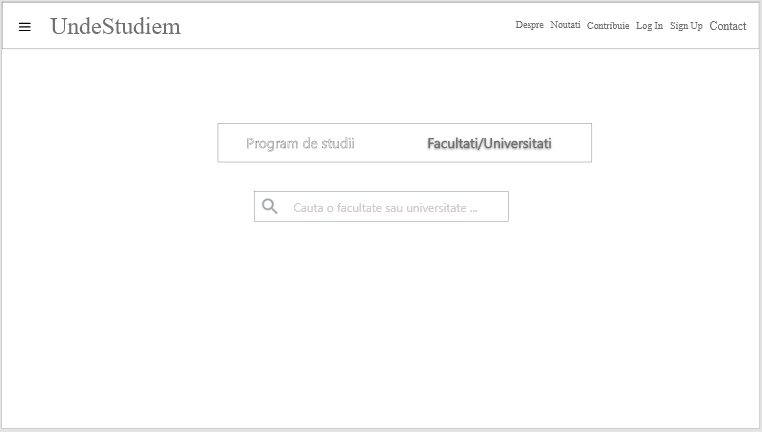
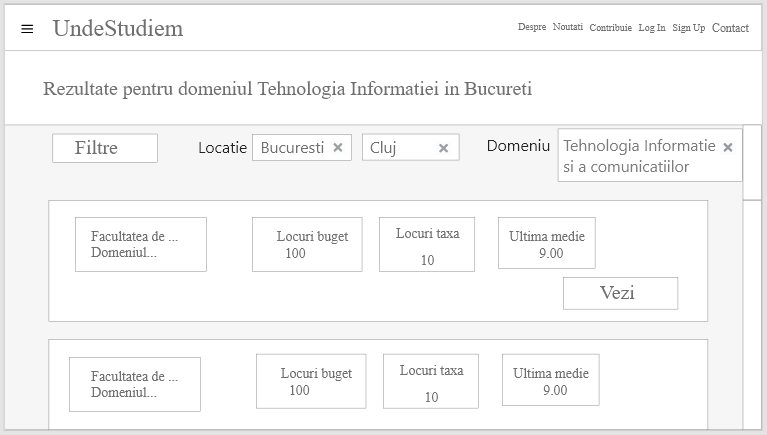
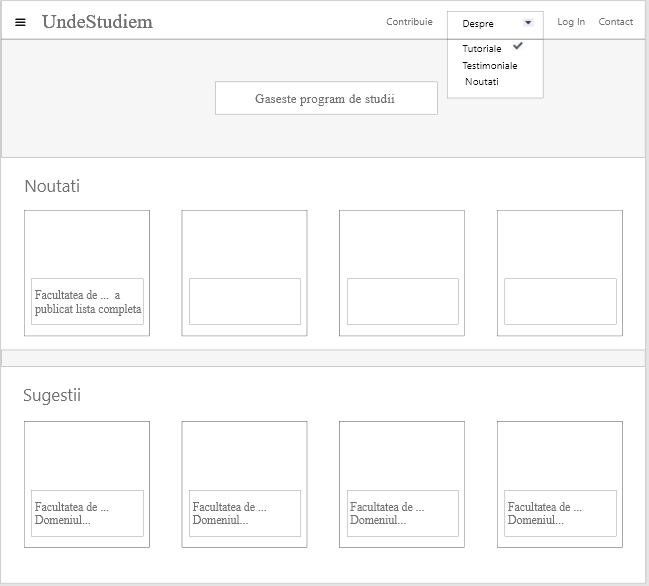
In this section we will present a quick summary of the design of the application.
User personas, user stories and the user flow
Interviews and analytics results obtained using tools such as Google Analytics and Hotjar
Information determining the target market size, the number of players and competitors, market share and presentation of the competition
We are happy to present to you: first version of UndeStudiem
This section offers an overview of the validation of our MVP
Presentation slides are linked below
The application process for each university is most of the time described on a paper stuck on some window of the main university building and on some obscure old online page, or even broken down across multiple PDF files. This situation makes it even harder especially for high school graduates to decide not only on where they should apply, but on how, when and on “the always underestimated” why.
An usual student willing to apply for higher education considers at least around two or three universities, each imposing different procedures, costs, travel expenses and dates to take into account. The enrollment process requires the person to be on site at least 2 or 3 times for each individual university. Sometimes they have even the same periods of enrollment happening only on site.
Additional stress produced through scattered information and obscure sources affect both young students and their families, usually demotivating candidates in order to apply to fewer and closer universities, even if those might not always be the best choices available for them.
Therefore, the initiation of the professional future of the student starts on the wrong foot. And it can easily end with dropping out, changing paths, accommodation problems, bank loans, accepting less than they deserve in terms of salary and employment status - all because of the lack of centralized information for the process of application.

We propose a presentation platform for all universities in Romania built on the idea that keeping oneself up to date with regulations of the application process should be the easiest part for choosing the suitable university for young adults. In order to achieve this, we aim to centralize relevant information such as application steps, how many students can enroll to one institution, taxes, additional costs, the process of obtaining a scholarship, information about campus accommodations, optional and non-optional courses.
Moreover, in order to better validate and update information, reviews can be added to any university page. Also, in order to actually help the future students, the platform will not only support centralized information from university websites and public sources, but also a number of features designed to help comparison and filtering based on search criteria on the hosted data. This way, people interested can narrow their options based on a few key factors before going more in-depth.
Franklin Roosevelt once said: “Rather the chance, the choice is the one determining our destiny”. We want to go forward with this and add: the informed choice is the one determining our destiny.

Customers of this platform include people of various ages. It is true that most of the content is intended to help teens, but also students (people aged from 14 - 25), but also their families, teachers, people who are getting involved in their process of deciding the suitable university for them, also universities’ employees (people aged from 26 - 65).




Centralized and up to date public information about all universities in Romania
Including studies about graduation rates and employability rates for each university
Rich, but essential and complete information about each study program and university
Possibility to make intelligent custom search selections and filters
Feedback, reviews and rating system from students and former students
Vizibility - not only with the business and marketing plans for making the public aware of this platform, but also through the survey that we conduct, we aim to build a community interested in the platform from the conceptual process of the product
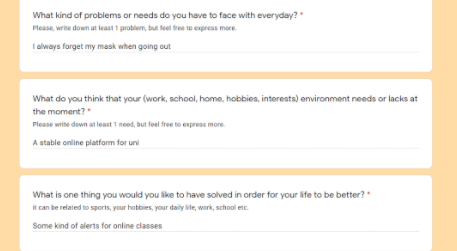
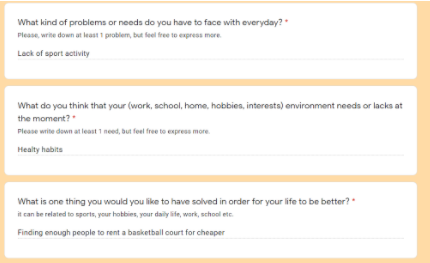
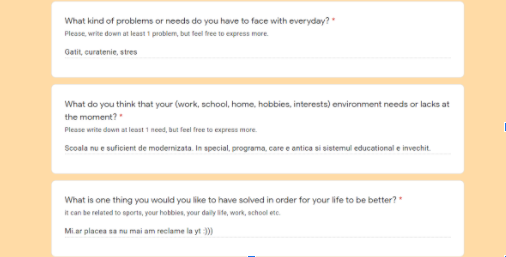
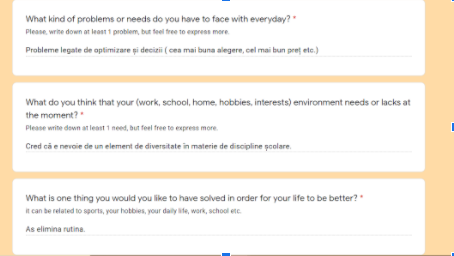
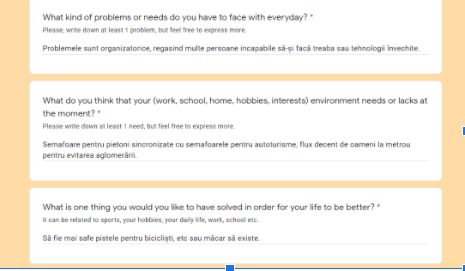
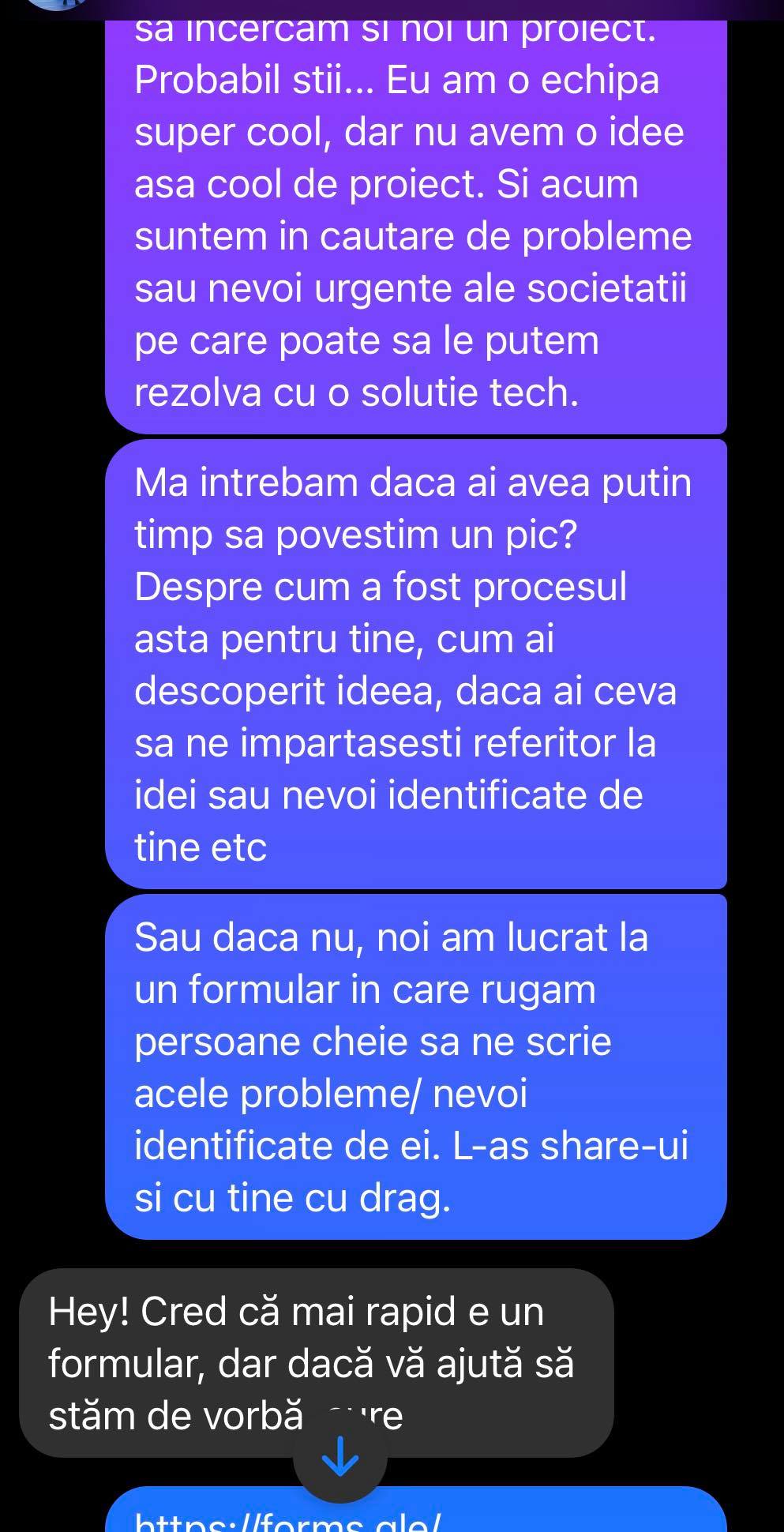
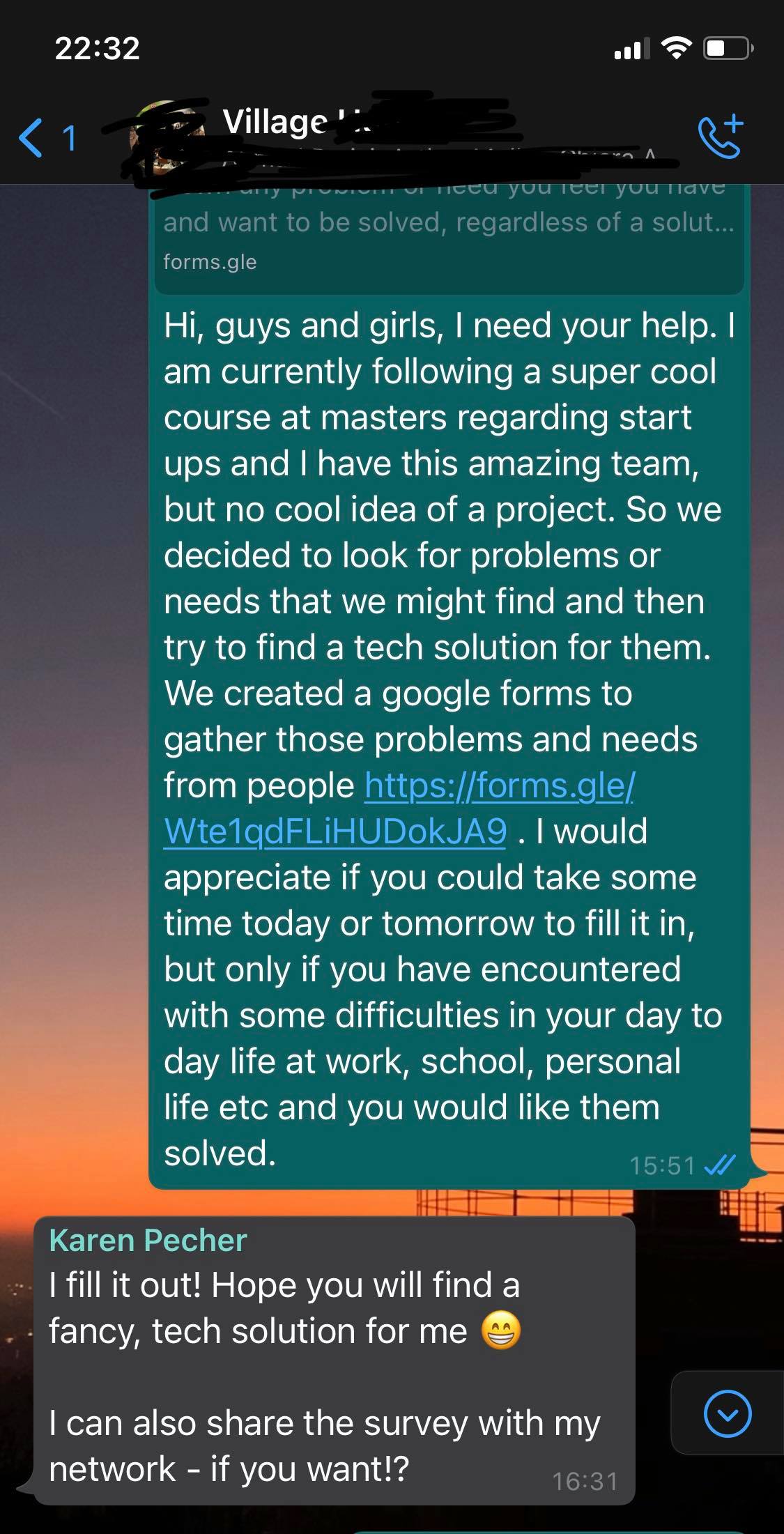
Our story goes as the following: Before joining the course, we built up our team and discussed a way to identify problems in the current society. We all shared the ones identified by each (you can find some below), but because we were not sure if those were identifiable with others, we decided to conduct the following survey
We delivered the survey between October 5th and 18th, 2020 to some key acquaintances of ours, in order to find current problems or needs in the society, with the specification of letting the respondents know that we can only solve a problem with and through technology. We received 28 responses, from people aged 16 - 28 years old. Among them, there were 62.1% female persons. Thirteen of the respondents came from the IT field, 4 from the medical field, 2 from the economical field, 1 KBO specialist, 1 person from the architectural field - all being students and/or employees - and 8 high schoolers.
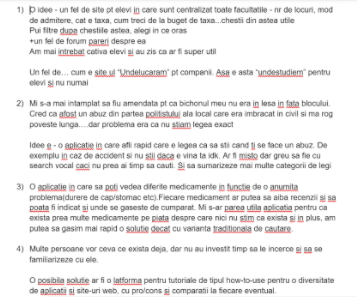
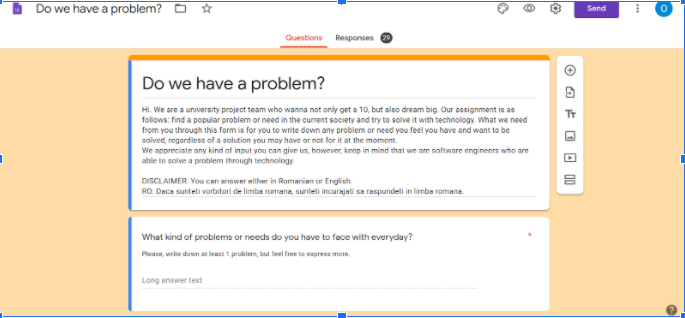
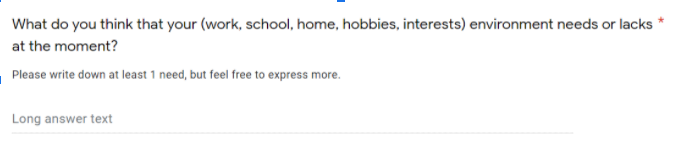

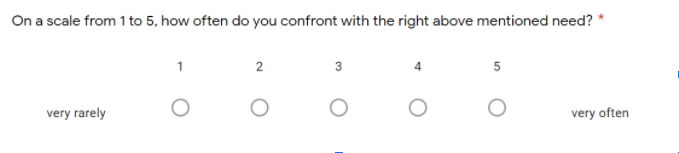




This survey helped us identify lots of problems people face more or less everyday in this contemporary world. We had to sort and evaluate not only which can actually be solved by technology, but which are in our scope as well. A great deal of them were focused on getting someone in touch with something. Helping people find things, places, other people and information. In a word, they targeted communities based on interests, occupations and needs.
We chose to tackle a particular problem that we have met in the recent years of our lives: the horrendous process of gathering information about universities before applying. A problem many people have been acquainted with is the state of chaos most of the university websites in Romania are. Distributed information across multiple platforms, most of the time outdated, and no clear indication of its validity had stressed many generations of freshmen in the last decade.
Our team tried to find a simple solution to this problem: centralize the information. A single website that can help future students streamline planning for the future of their education. This can be achieved through standardization of the application process. Breaking the whole thing into simple steps, short and clear, will help everyone to better visualize what they need to do.
The main objective of this stage in our process was to identify how many people had experienced the problem we try to solutionate. The main concern of this step was to get a clear percent of people who can relate to this struggle, in order to get at least some insights on the nature of this market.
For this step, instead of simply considering everyone as our client, we target two important groups: people that have (recently) or will have to choose and apply to a university (in the near future) and people that are employed and active in a teaching position. First group represents clients, while the second group are possible collaborators.
While most of the questions had choice options, there were also some that required an uninfluenced answer. The purpose of those questions was not to quantify and validate our hypothesis, but to gain additional information about the needs our solution will have to meet in order to offer our clients the promised value.
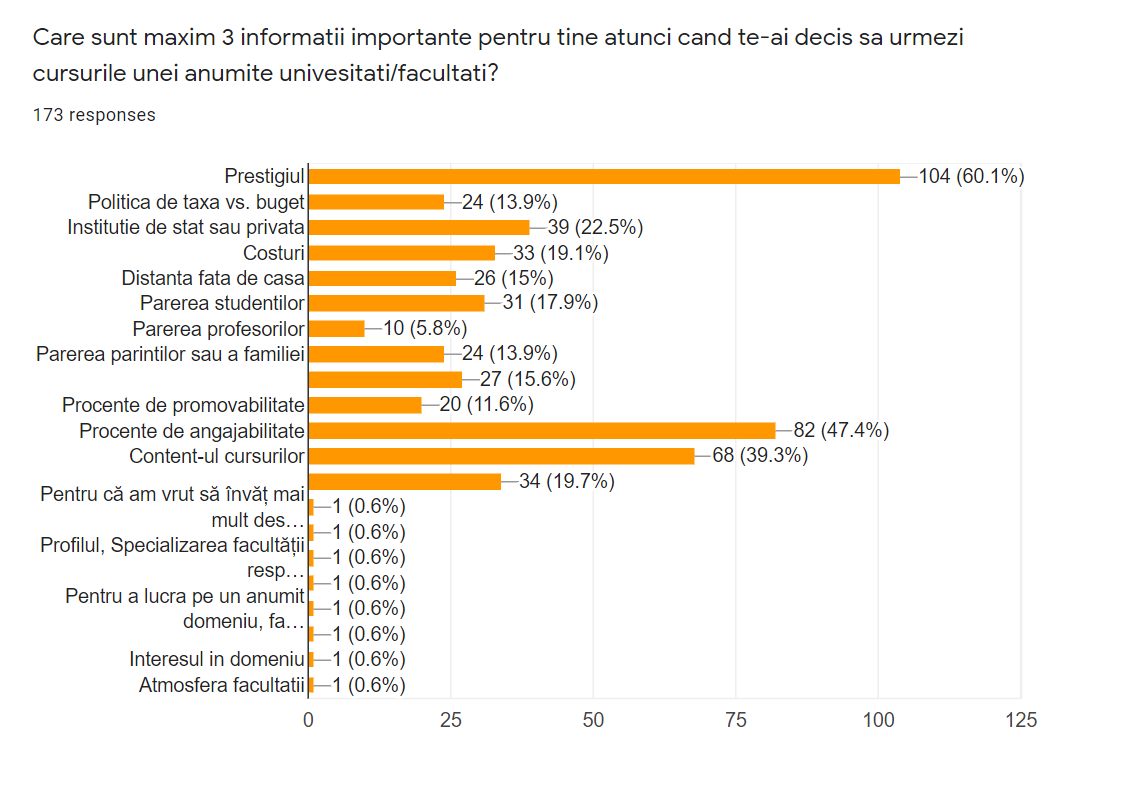
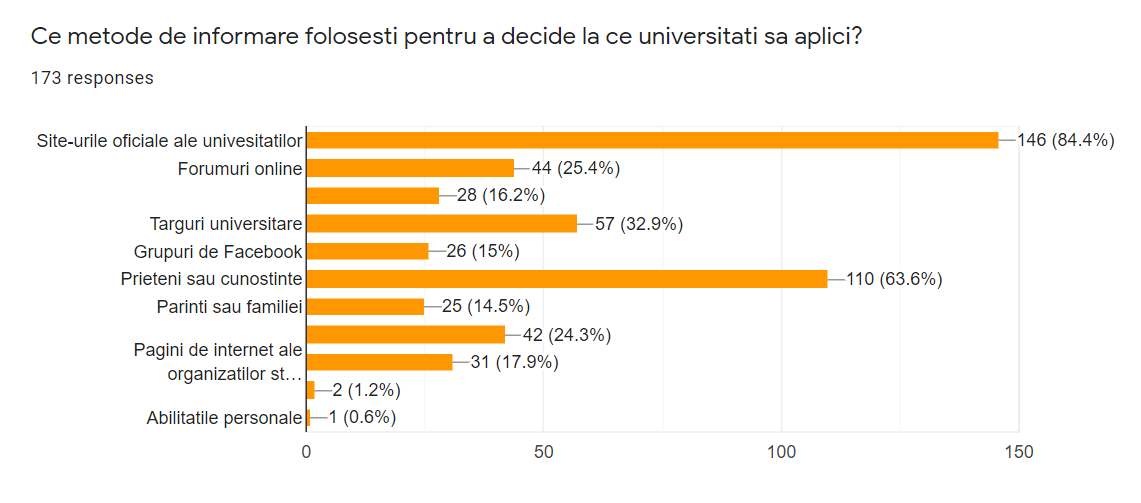
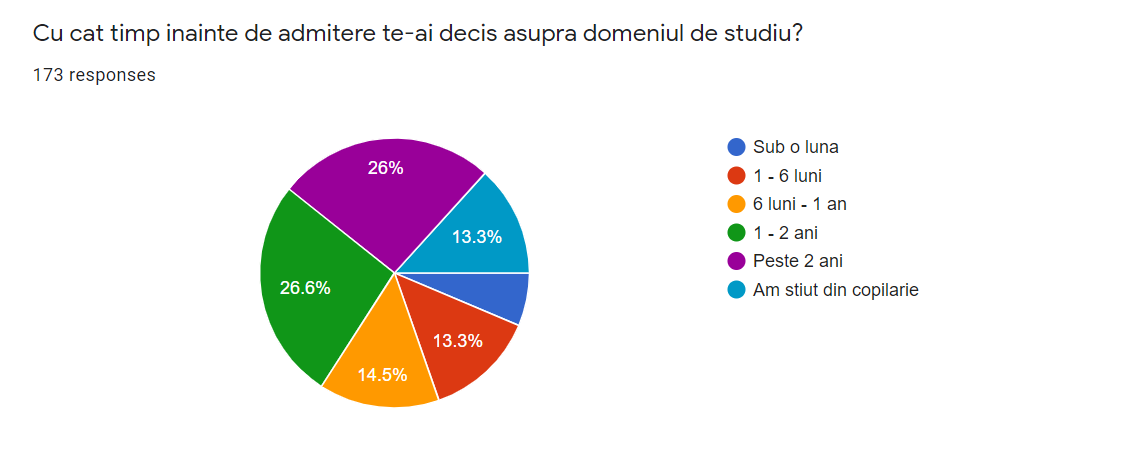
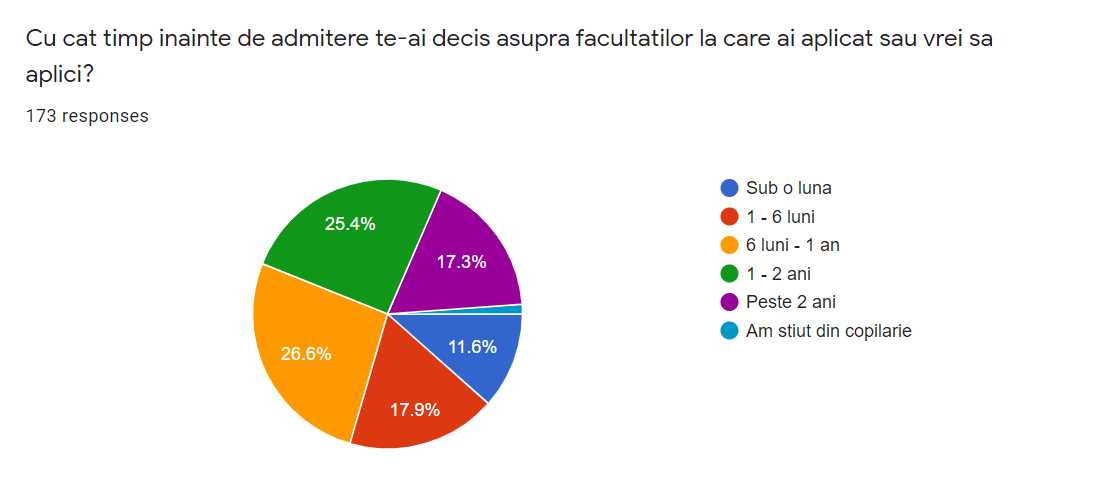
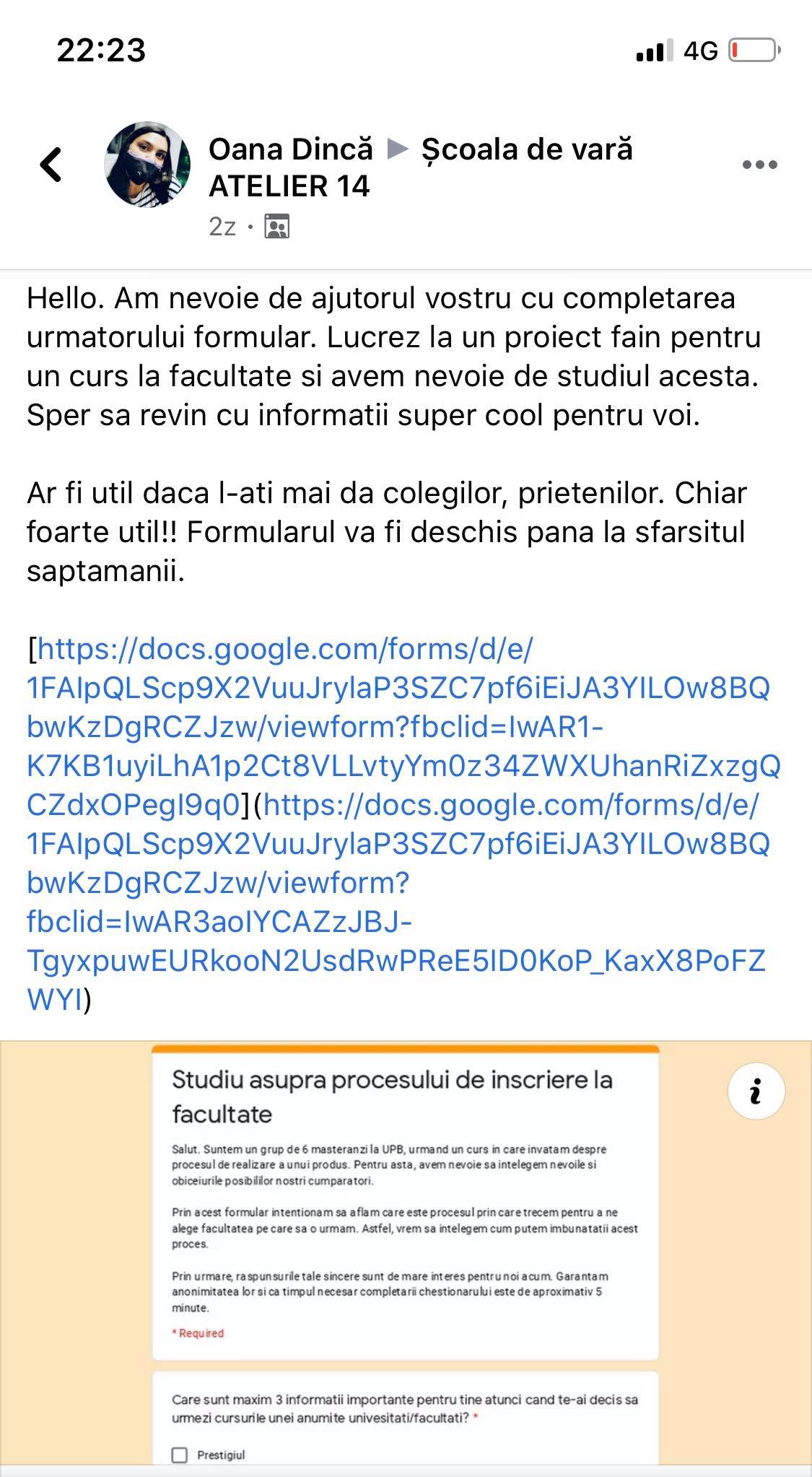
For the first survey, we had 173 respondents, aged preponderantly between 19-24 years old (61.8%), 16.8% between 14-18 years old, and the rest above the age of 25. Most of them were females (77.5%). Most of them do use internet platforms to get informed about universities procedures regularly - aprox. 50% of the respondents. They trust in a high proportion the official information, rather than Facebook groups or existent forums. However, they are interested in reading and listening to reviews from others in proportion of 79.2%, but they offer reviews in both ways in proportion of 30.1%. This explains the need of human interaction that happens at university fairs, for example, where the information exchanged is trustworthy in high proportions by 97 of our respondents.
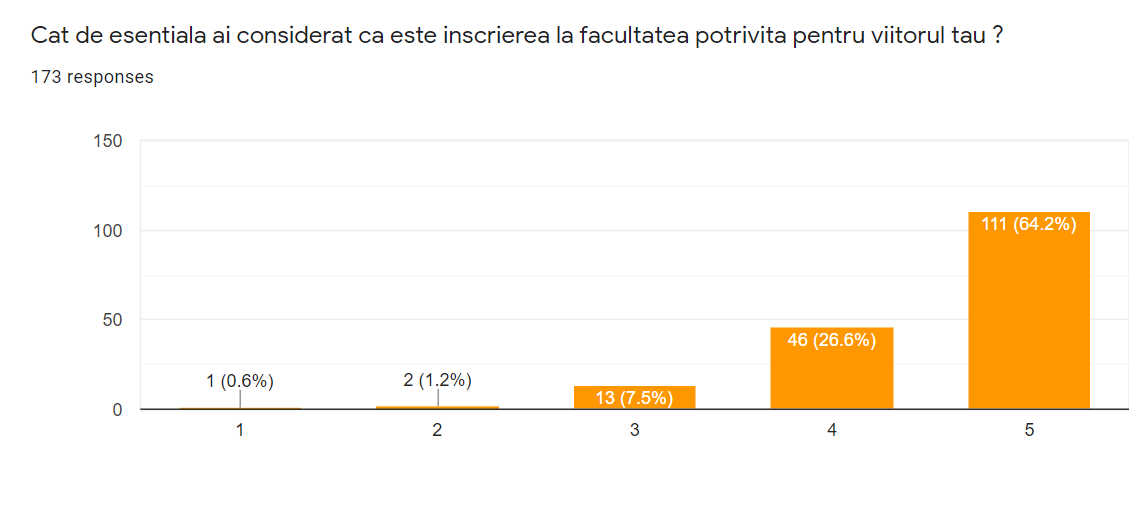
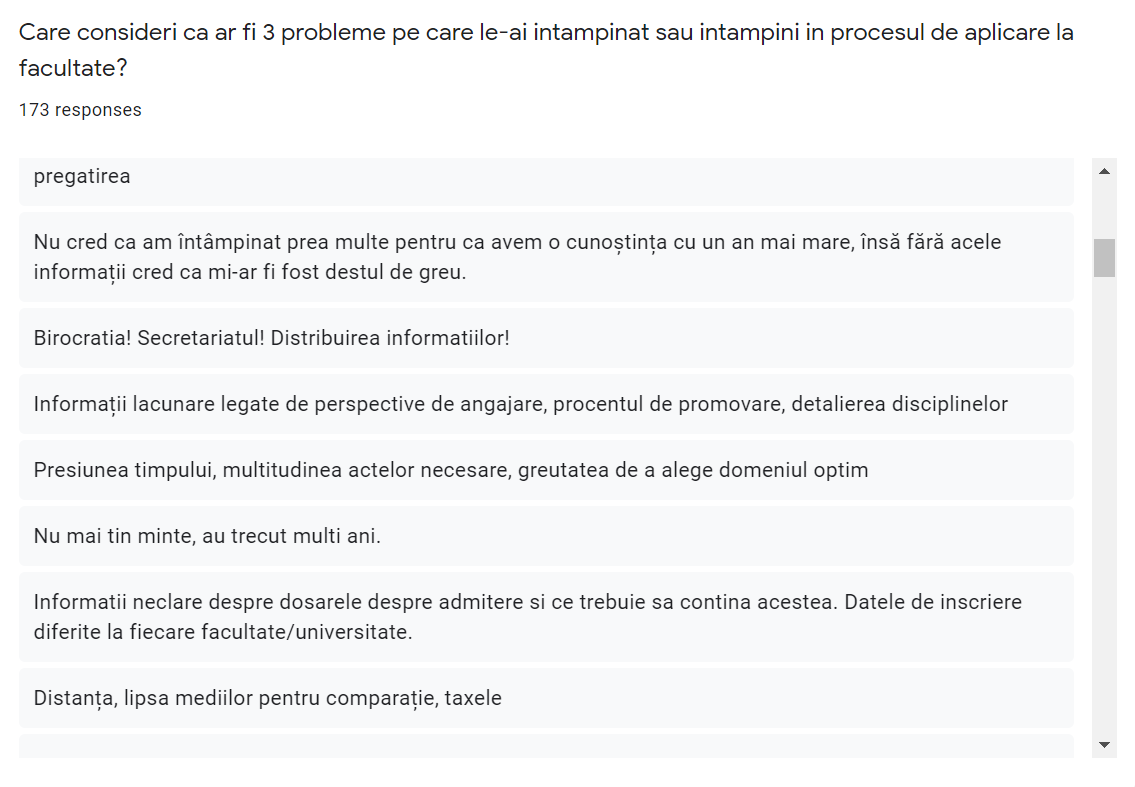
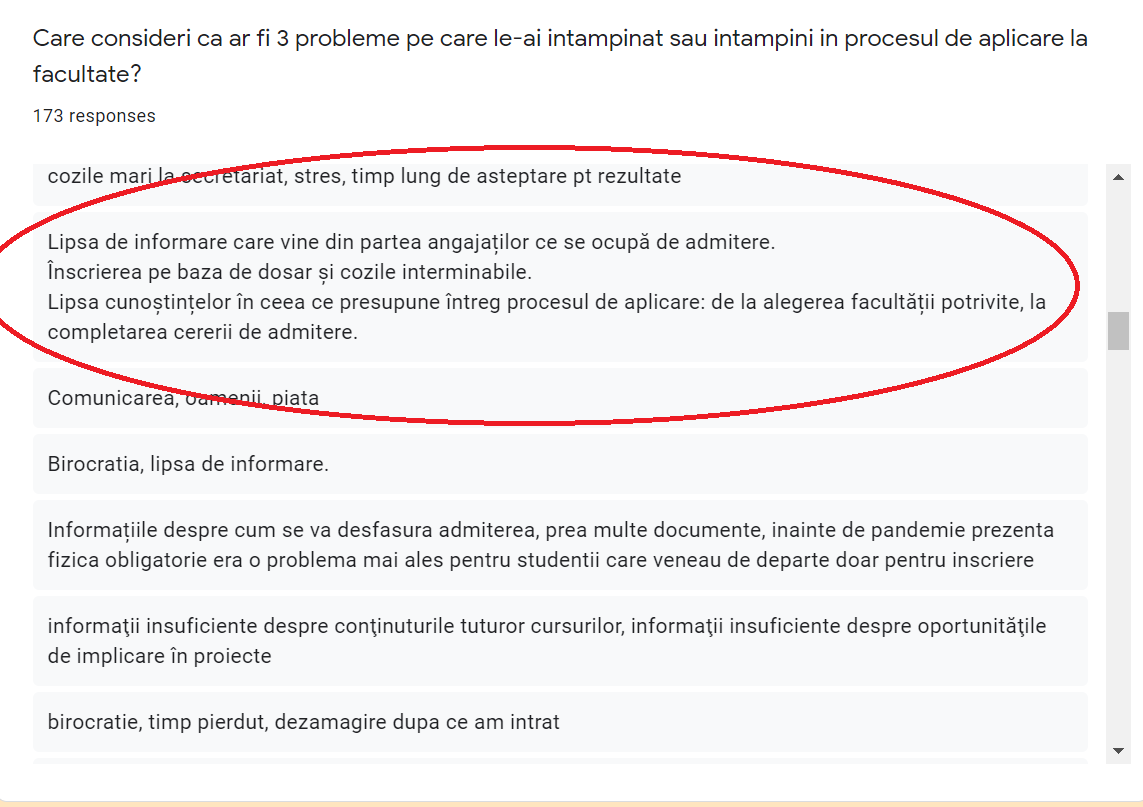
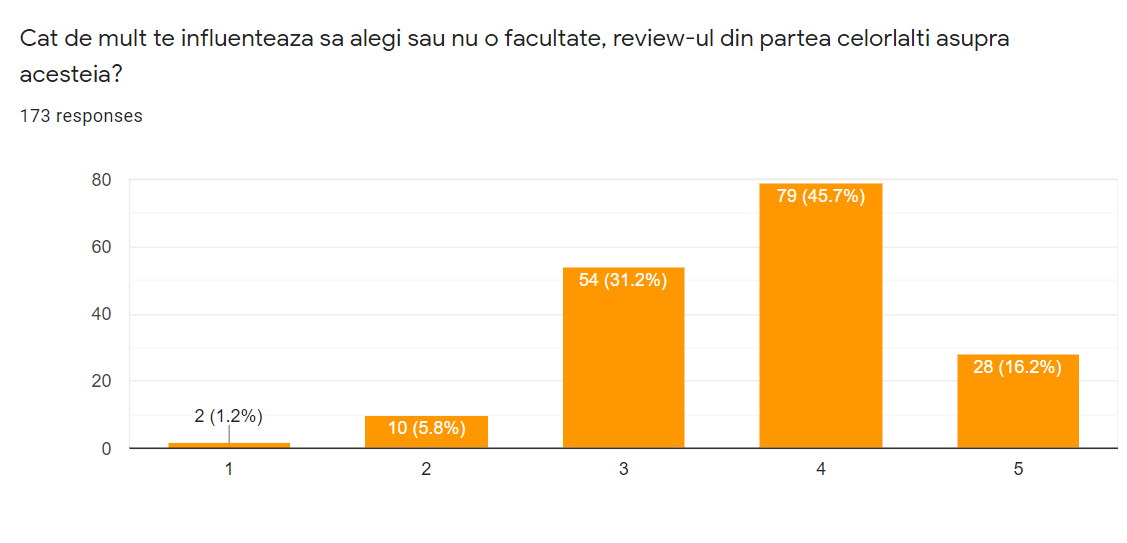
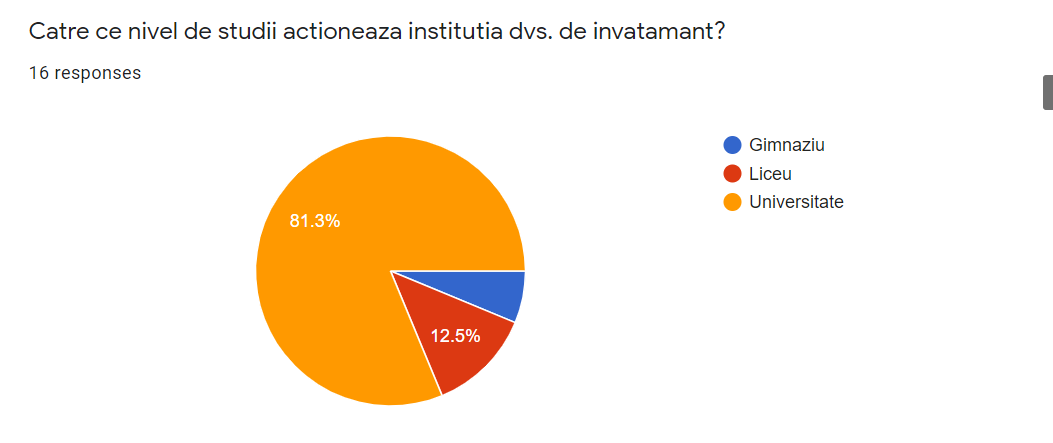
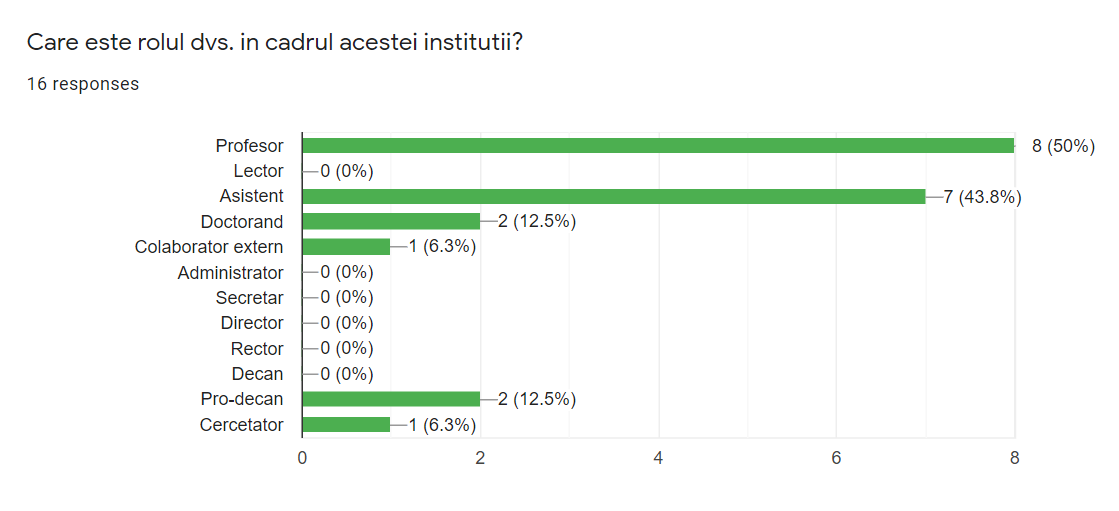
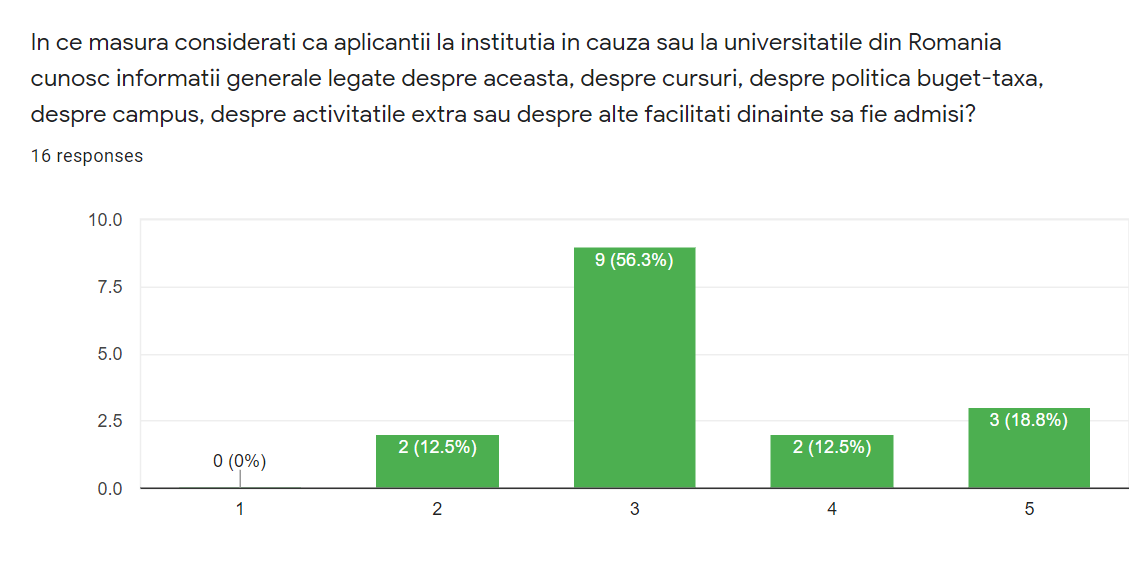
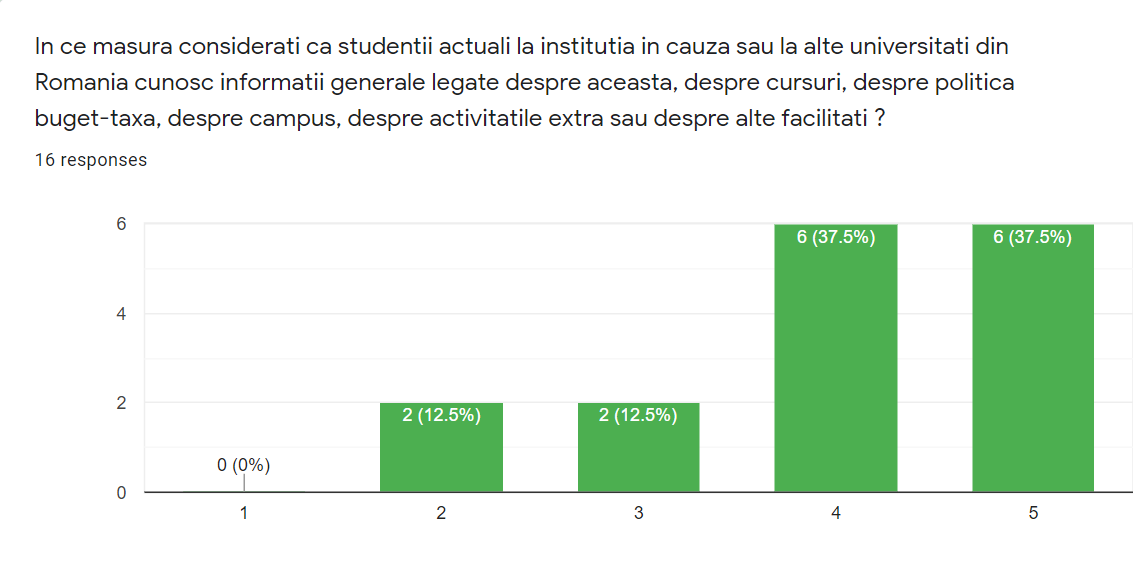
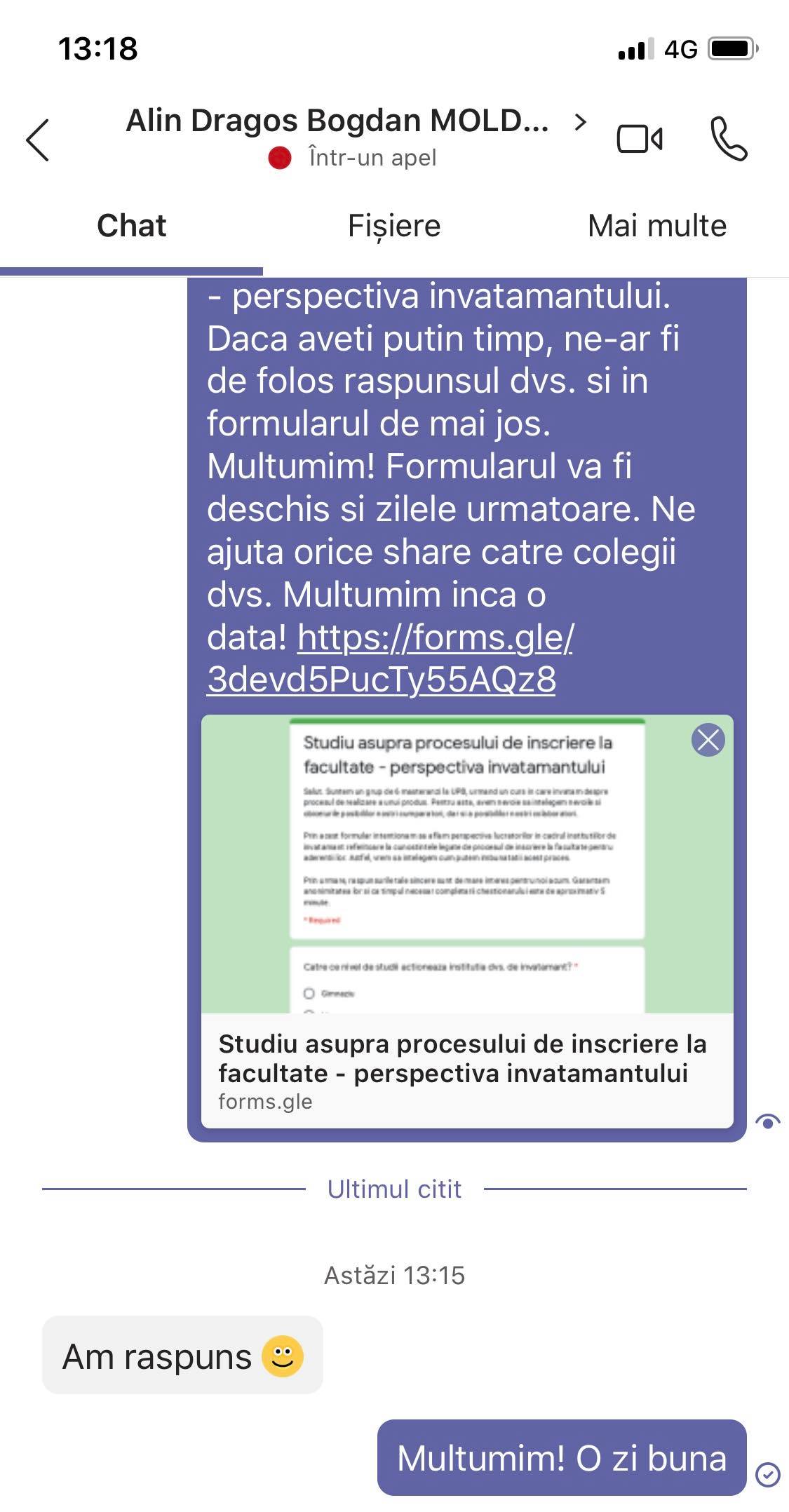
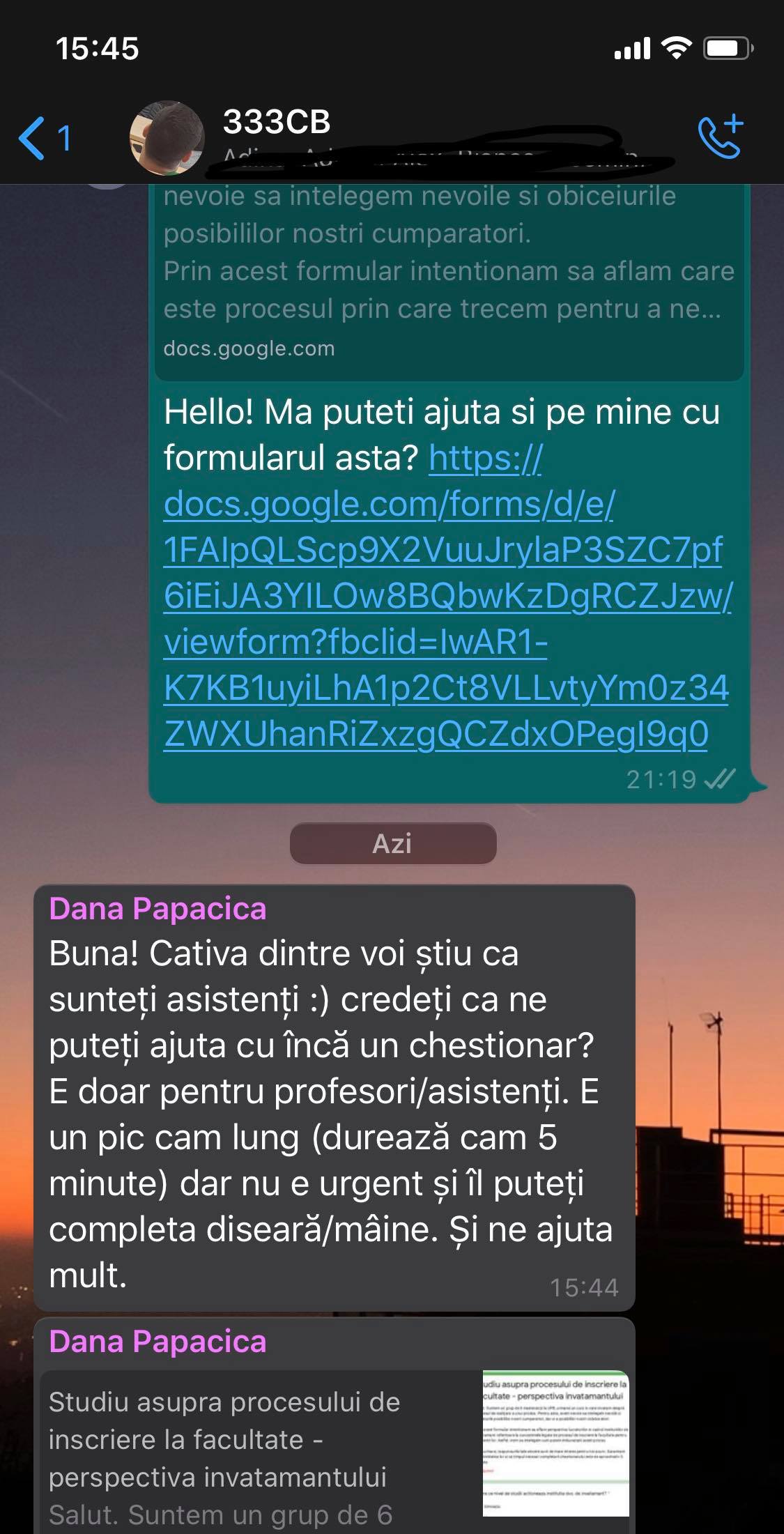
The second survey was directed to university and schools staff - teachers, professors, assistants, pro-deans, external collaborators and so on. It gained 16 responses, mostly from male university staff, aged between 20 and 55 years old.
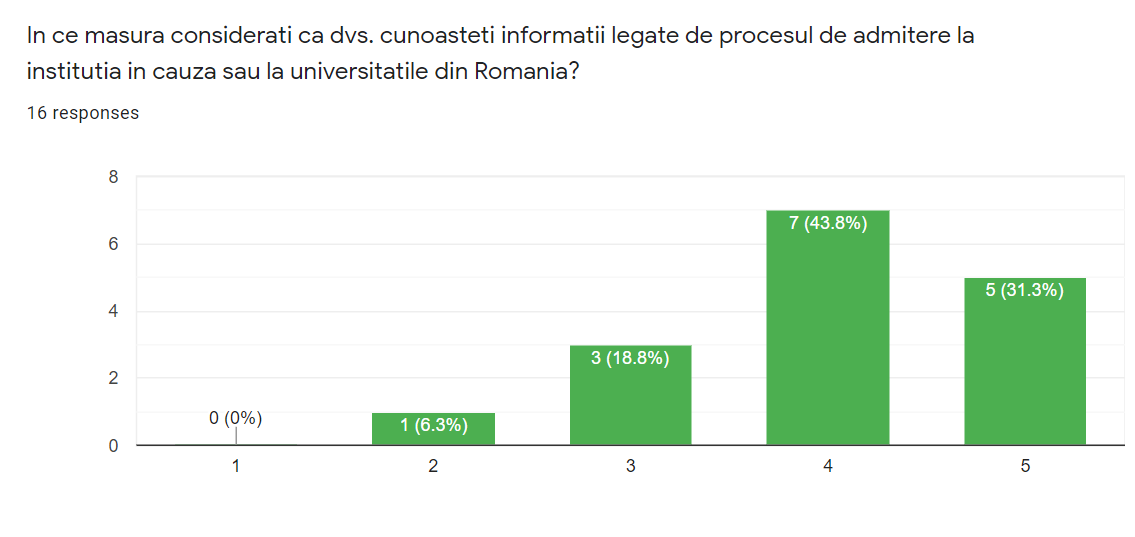
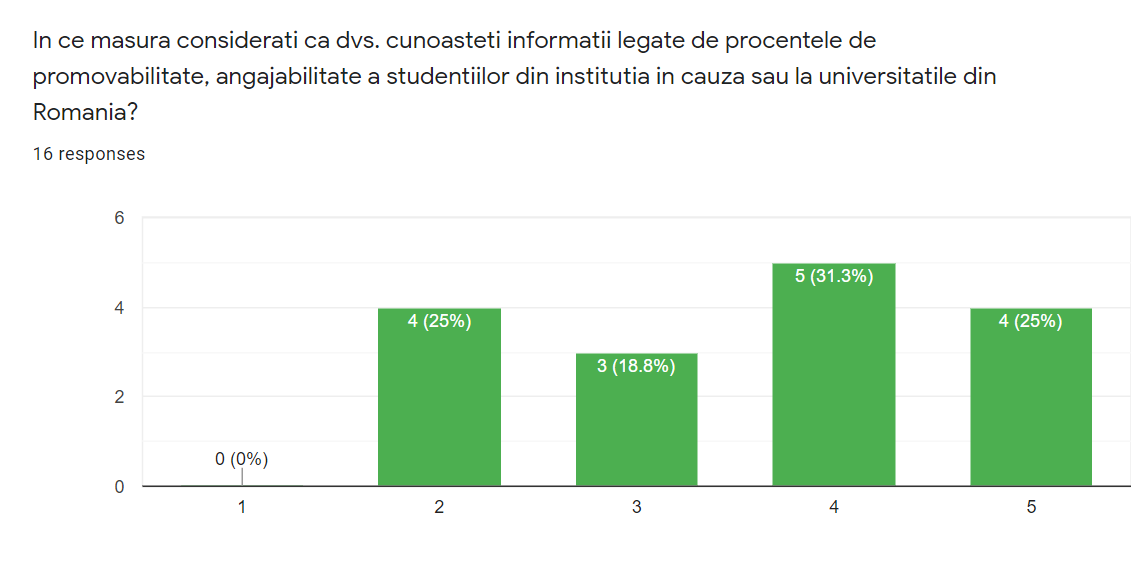
They would assume similar problems of their applicants as the actual applicants sustain: the lack of information about the enrollment process and of the admission process, the lack of information about the actual implications of the university in place, a lot of paperwork involved etc. Therefore, they assume in proportion of above 65% that applicants are not quite well informed when applying for higher education. Moreover, the main sources of information are believed as: friends and acquaintances (56.3%), official websites (56.3%), university fairs (56.3%), comparison among universities websites as well as parents and relatives (43.8%).
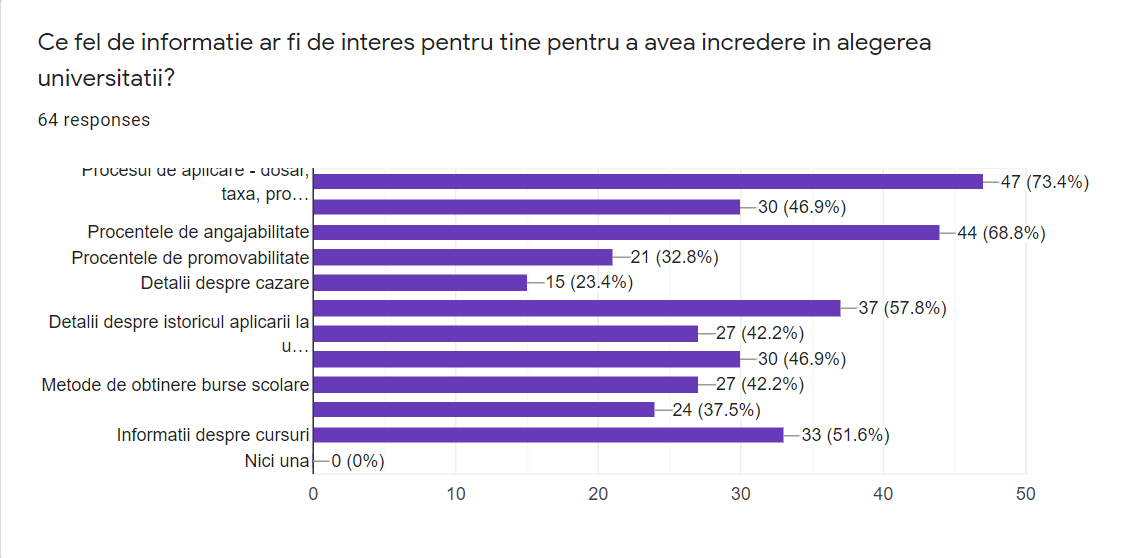
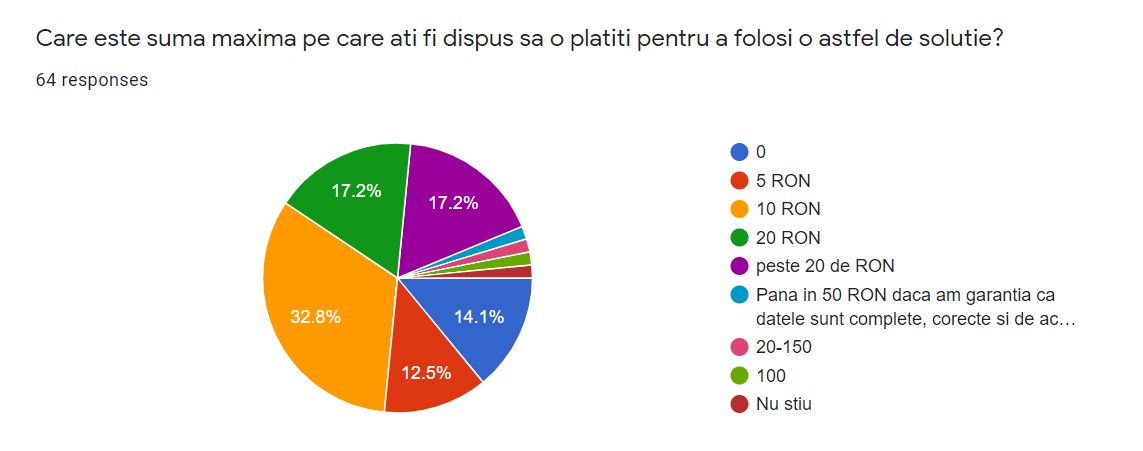
At this point, we have a somehow clear image of what the problem is and which are the needs of our possible clients. In this situation, we come with a solution. But before making any move, this is the last chance to make radical changes to our plans with minimal costs. So we have to validate that what we plan to build is indeed a solution for our clients as well. For this survey, we asked concrete questions about our proposed solution, focusing on gathering feedback from a greater diversity of people. After all, even if our solution has a clear target group, we have to prove it to parents, friends and more, in order to win trust.
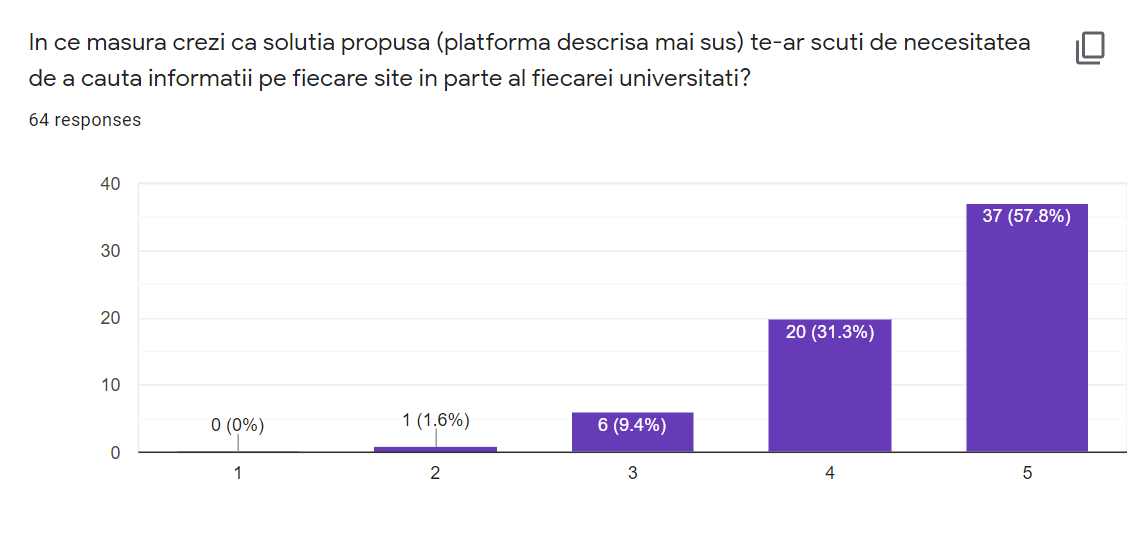
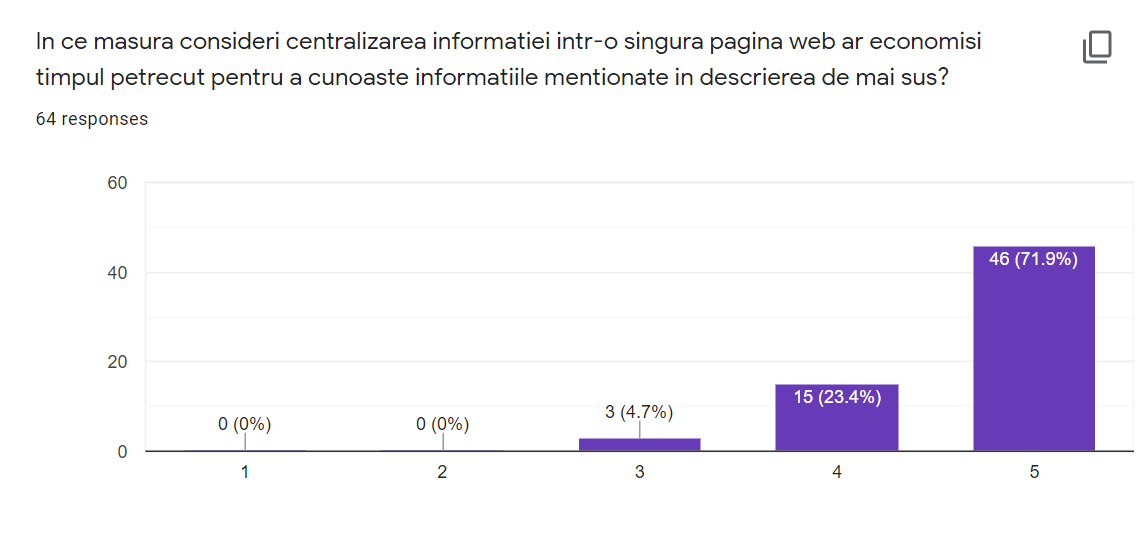
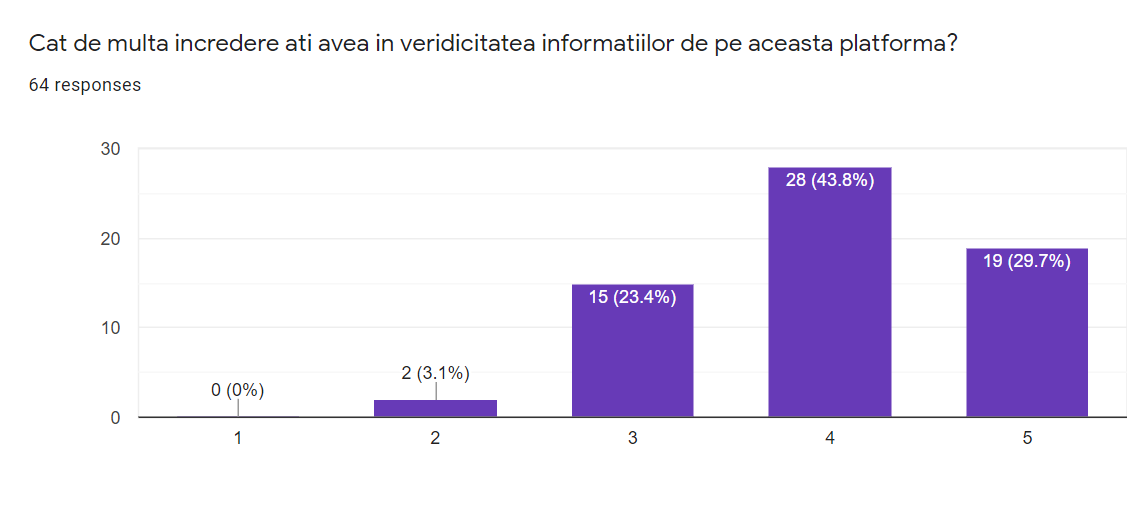
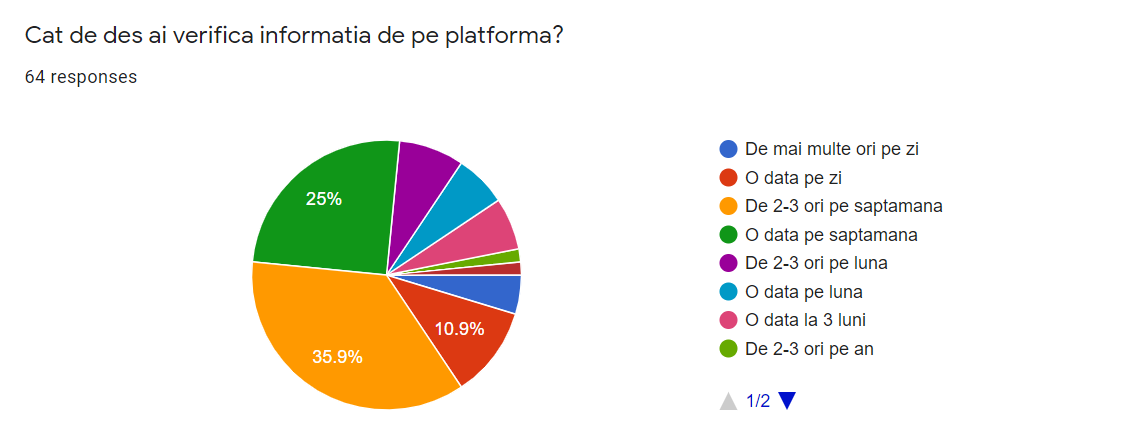
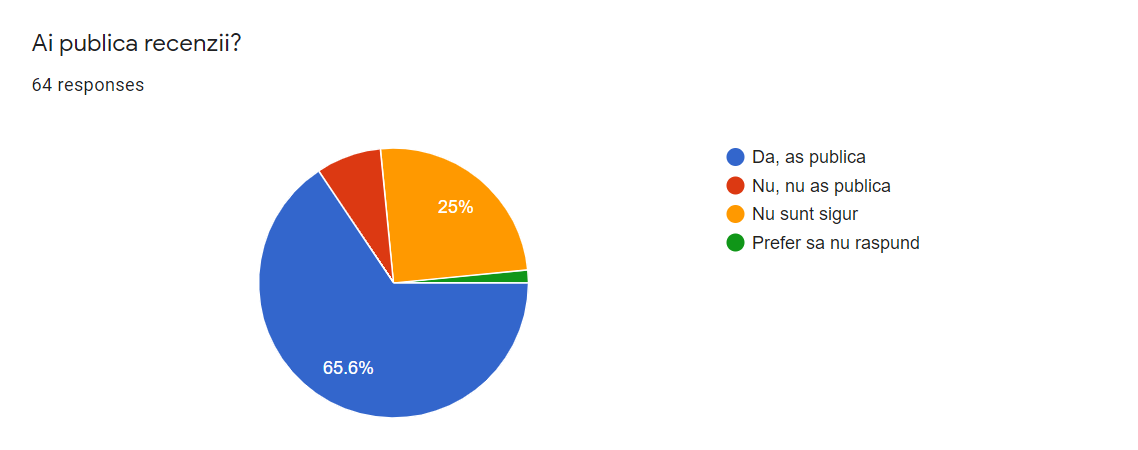
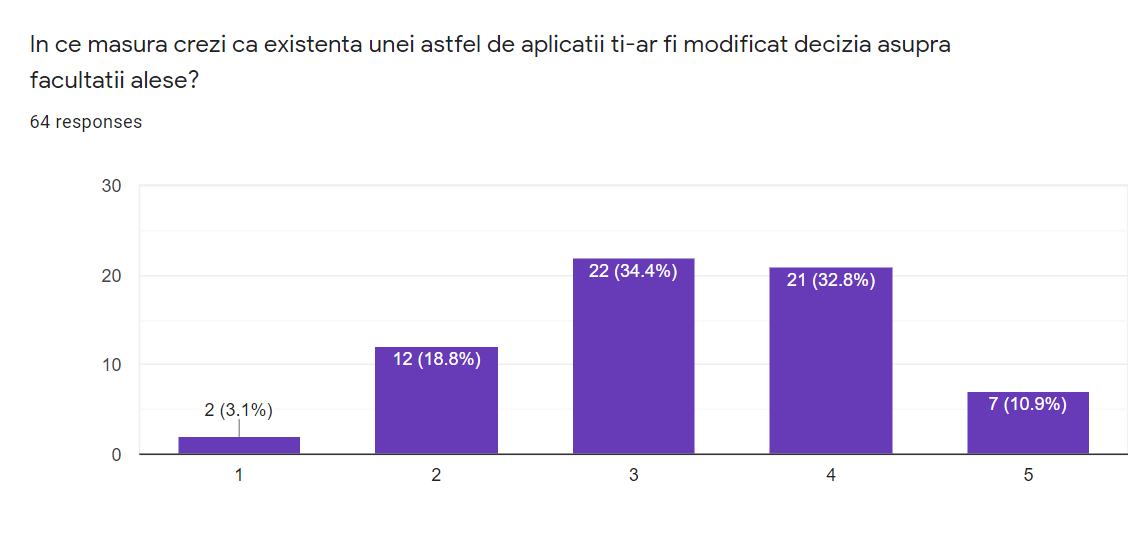
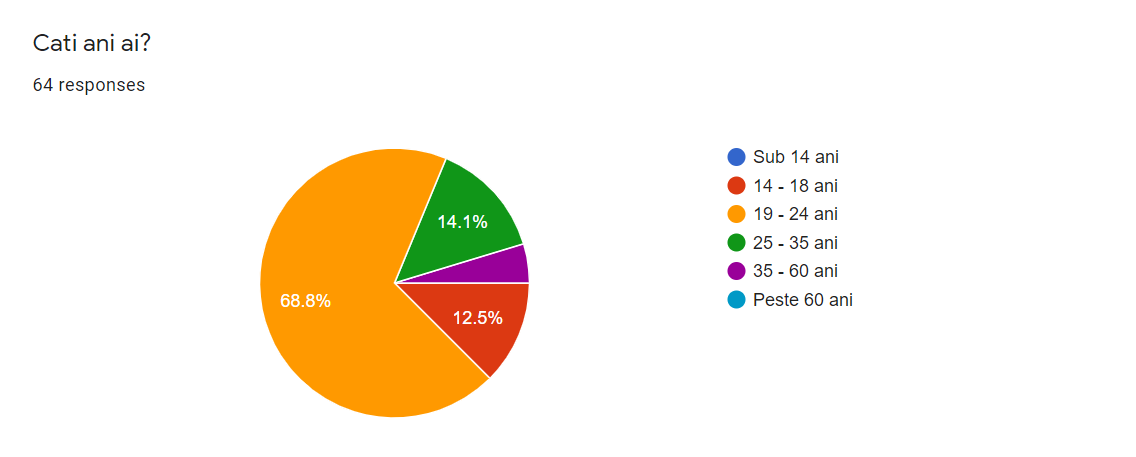
Our last survey gained a total of 64 responses from people aged between 19-24 years old (68.8%), 25-35 (14.1%), 14-18 (12.5%) and 35-60 years old (4.7%), mostly women (67.2%). Our respondents are quite regular virtual users, sustaining they have spent time on online platforms regularly within the week when they applied for higher education. Therefore, they would spend a deal lot of time on a trustworthy, efficient and proved-useful one page of information as our platform proposes. A number of 42 of them would contribute with reviews on the platform, while only 5 of them said they would not publish anything. The decision making process is thought of being influenced by the information in the platform for a great deal of them in different measures.
The conclusions extracted from the said validation surveys were predominantly in our solution’s favor. Both targeted groups find the lack of a clear, centralized and well-structured source of information a real problem for future students. As more time needs to be invested in learning the bare minimum needed to apply, candidates have less time and energy to prepare themselves for exams and to better evaluate their options. When the question “How do I apply?” takes more time, naturally, the question “Where should I apply?” will have to be answered faster, but not necessarily better.
We have somehow anticipated this behavior, so we added in all of the validation surveys an optional question translated as: “Would you be willing to give us your contact details (name, email, phone number)?”. We explained below the question that in the eventuality of a product release or of a newsletter that we would love to share with our audience, they would be the first ones we would reach. Therefore, we somehow succeeded in building our first database of future customers and possibly collaborations.
Moreover, two other optional questions were added in the surveys: “If you believe we’ve missed to ask you anything, please write it down here” and “Other suggestions or observations”. Not only did their insights contribute to our conclusions from one survey to the other, but also to our internal thought process of the entire project. They helped us shape the image of the product we want to deliver merged with the one they want to have.
Having validated both our hypothesis and proposed solution, the team is now ready to delve into more product oriented questions. Despite having confirmed our ideas at this stage, the validation process is far from over. Each future step and decision will need additional time and effort in order to be certain of its value.
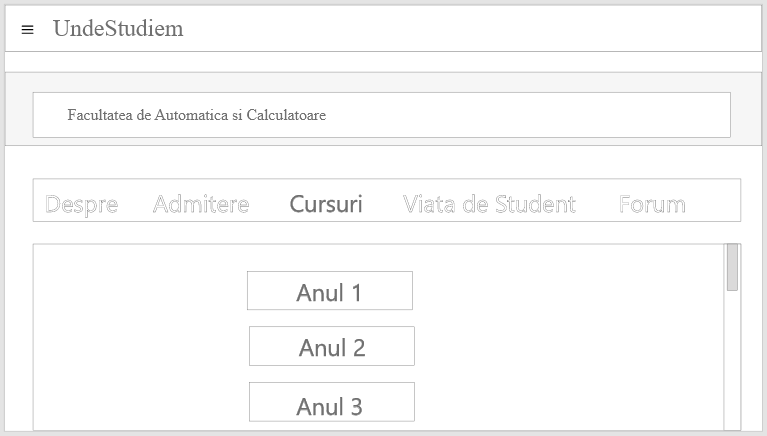
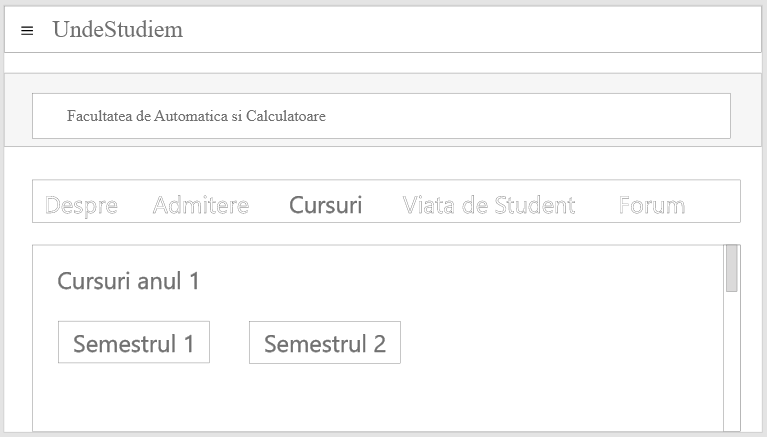
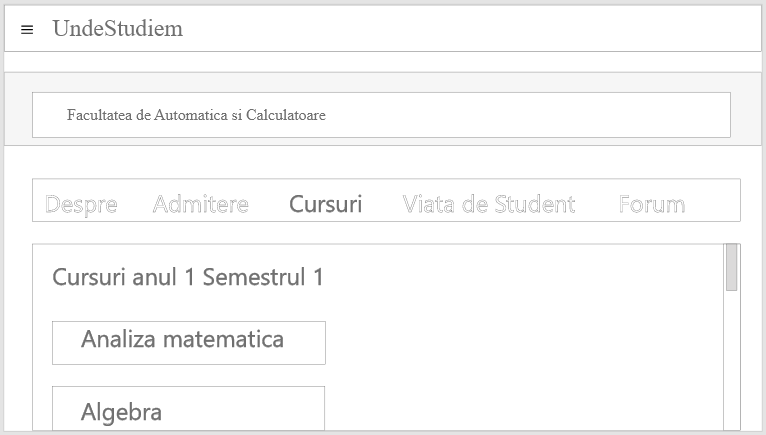
Student can access the list of universities study programs by going through the following steps
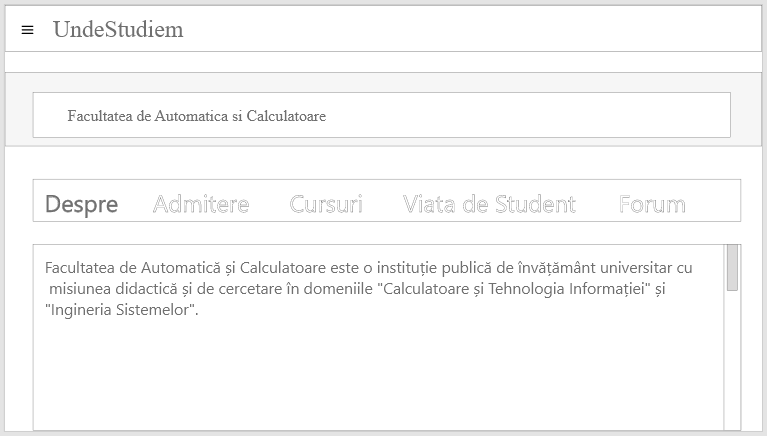
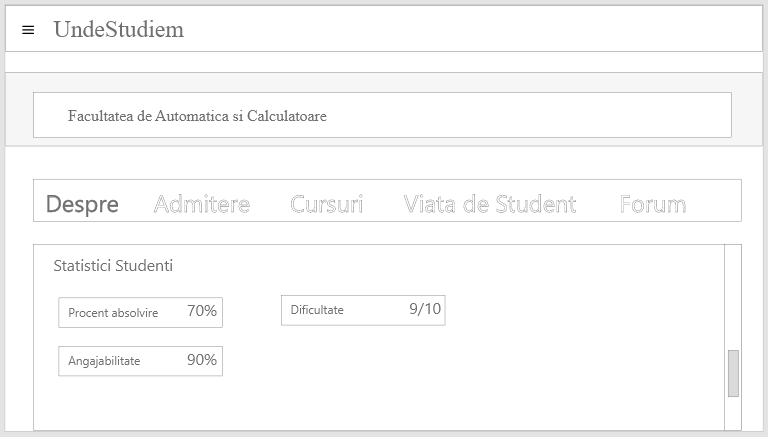
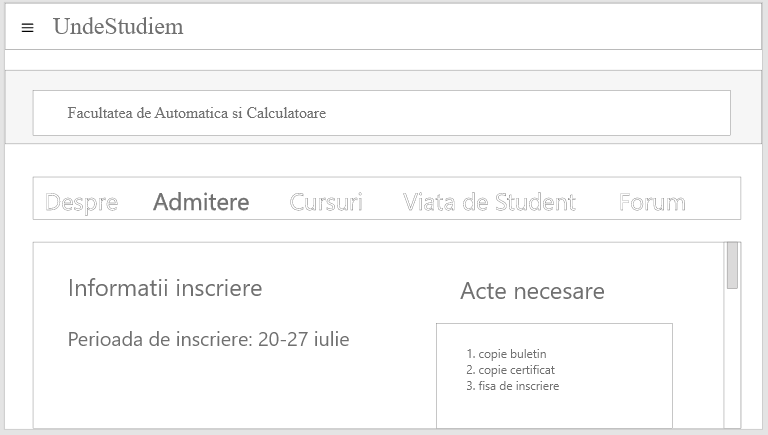
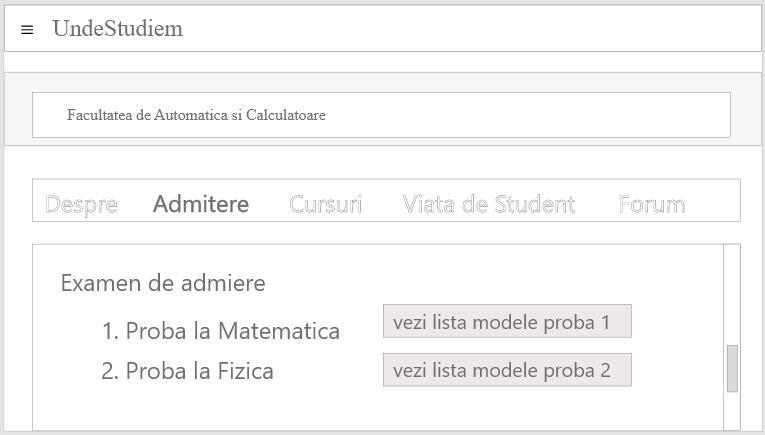
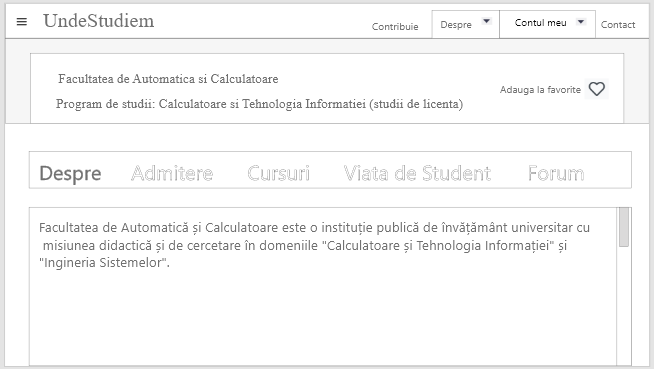
The university page contains a list of structured information regarding the admission, main courses, student life, student statistics and feedback from former students.
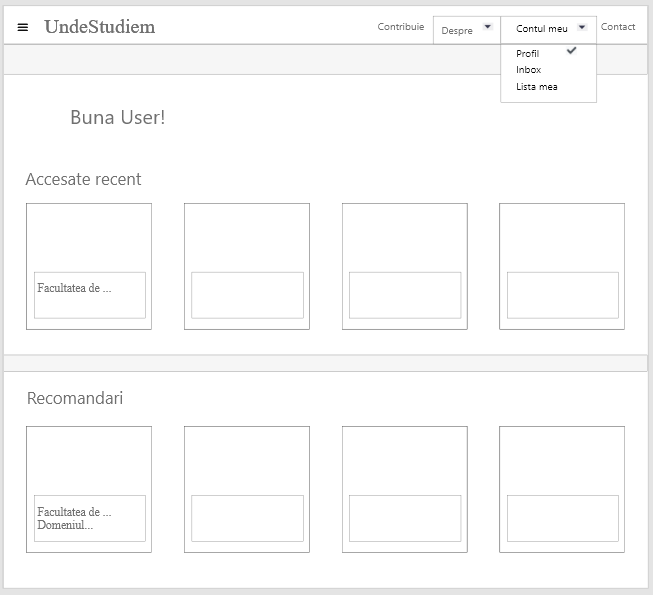
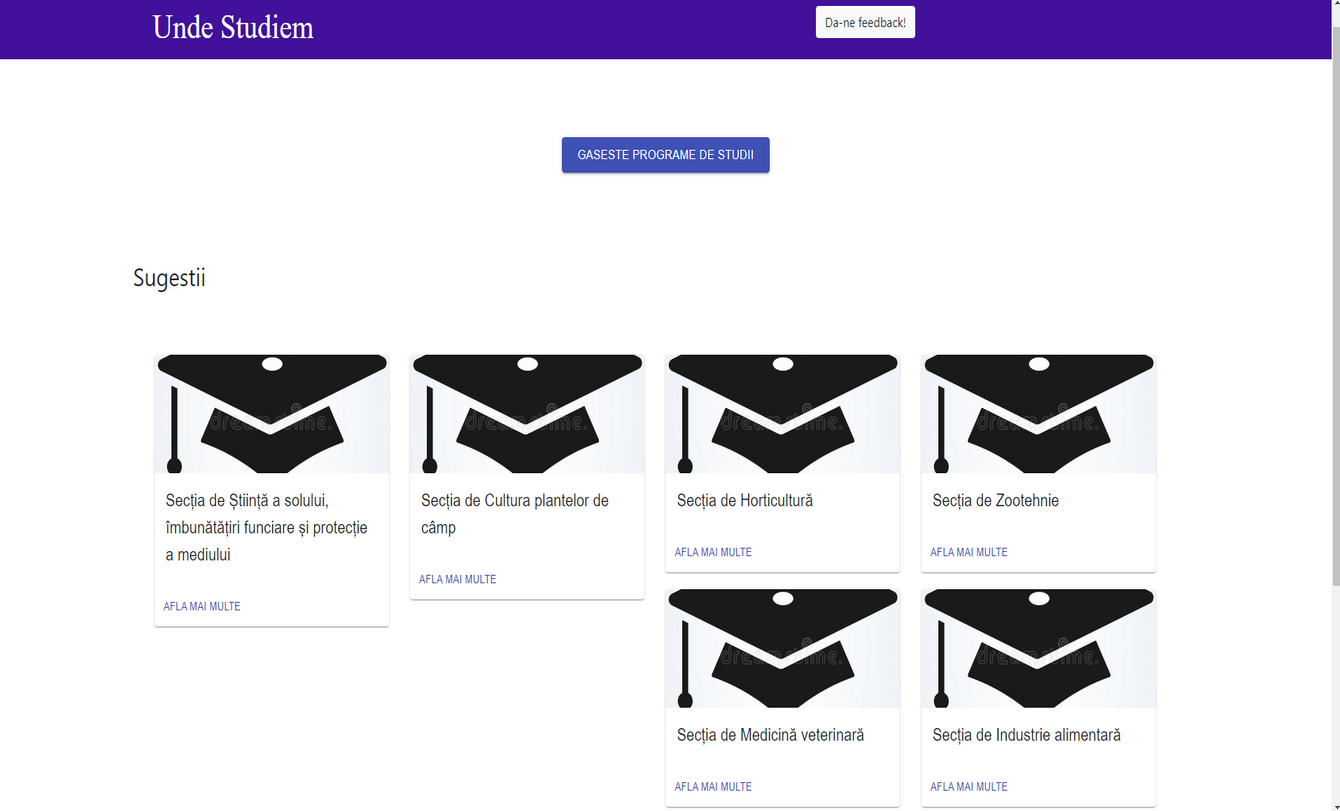
The landing page of the application here
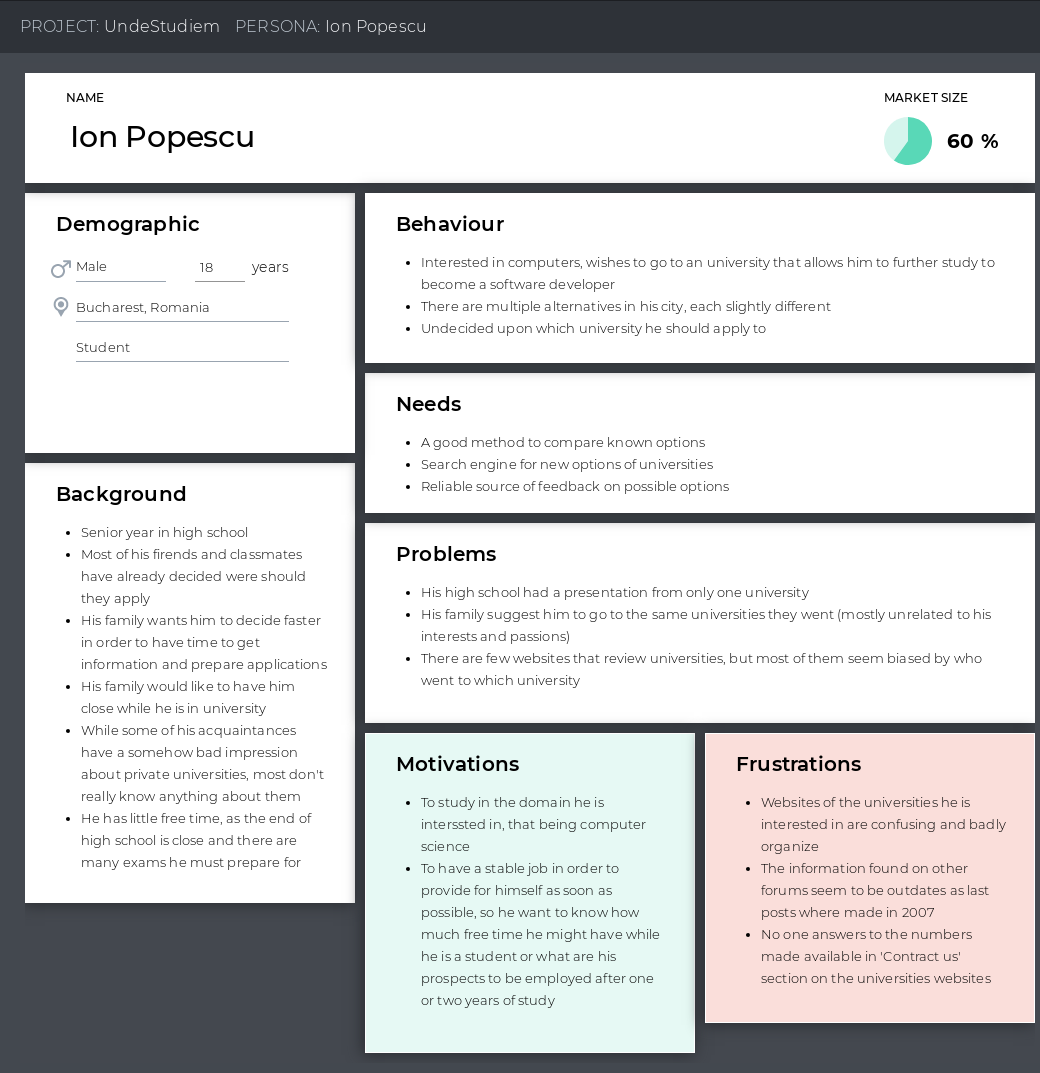
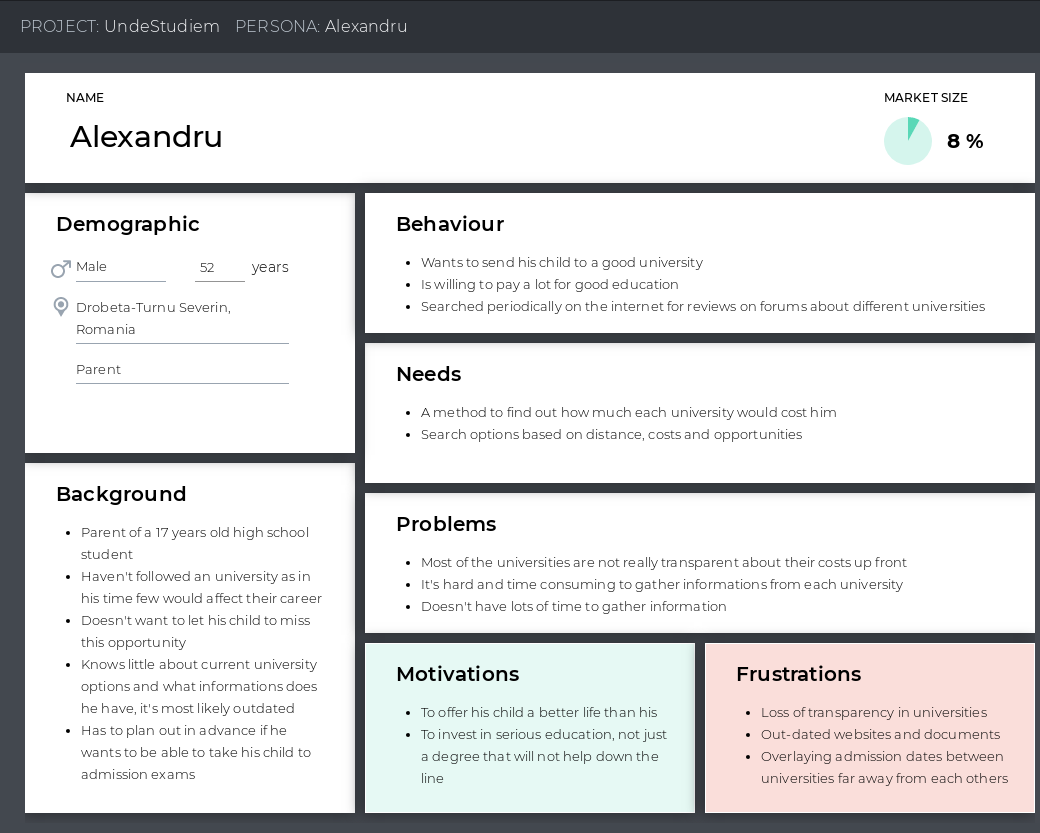
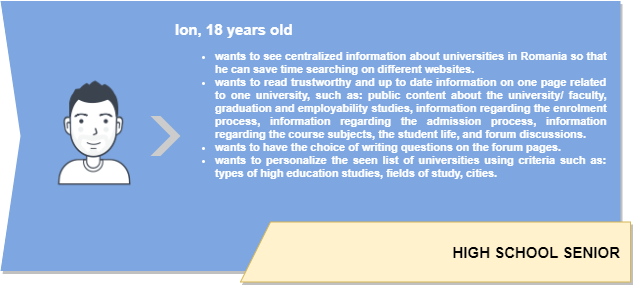
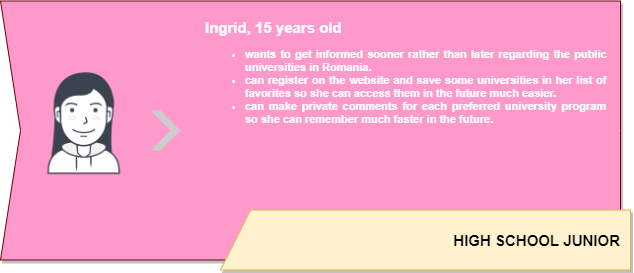
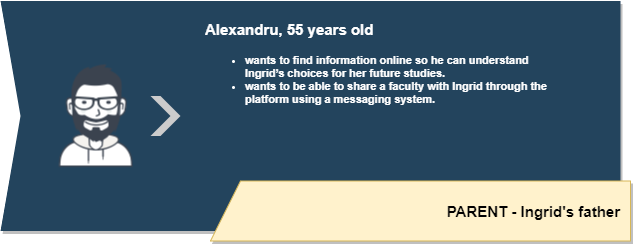
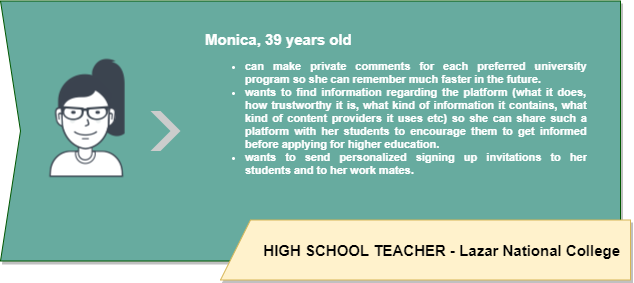
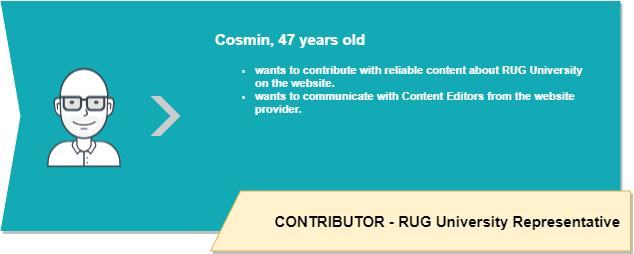
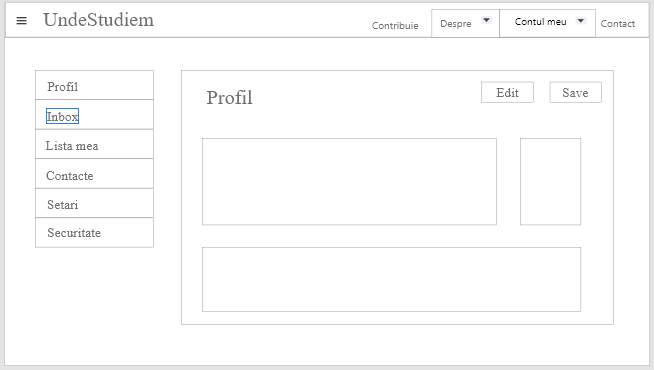
We made the following updates. The user flow for a non logged users differs from the flow of a logged user. After sign in, each user can create a list of favourite studies programs by adding them to their personal list. Therefor, they have a personal page where they can edit their personal data and administrate their list of study options, and come back any time to review them.
Taking into consideration the pandemic situation, we decided to have several custom versions of face-to-face interviews. One of them would be the idea of presenting our solution and the invitation to an interview via email text. Another one consists of recorded phone calls. And usually, we would not make it an official settlement when discussing about our project in colocvial talks or messaging contexts. However, some insights would mostly cover the fact that our idea is unique for our interviewees, they haven't come across anything similar even though there exist some (check Competitors section), but they almost never thought about looking for something like this. High schoolers take their decision without needing or thinking about the fact that they may need this kind of platform.
They find our solution hard to reach a certain amount of faith and trust in order to gain regular users, regular activity and mostly, to reach a higher vision of improving the educational system in Romania.
The main takeaway of all our discussions is the fact that after we deliver the MVP, we can find far more helpful insights regarding our product. We decide to focus therefore more on the main customer segment (young people, students, parents, high school teachers), rather than university representatives, in order to get our product known by the public.
Bianca - high-school student, 18 years old, from Bucharest
Mircea - Masters' degree student, 23 years old, from Piatra Neamt
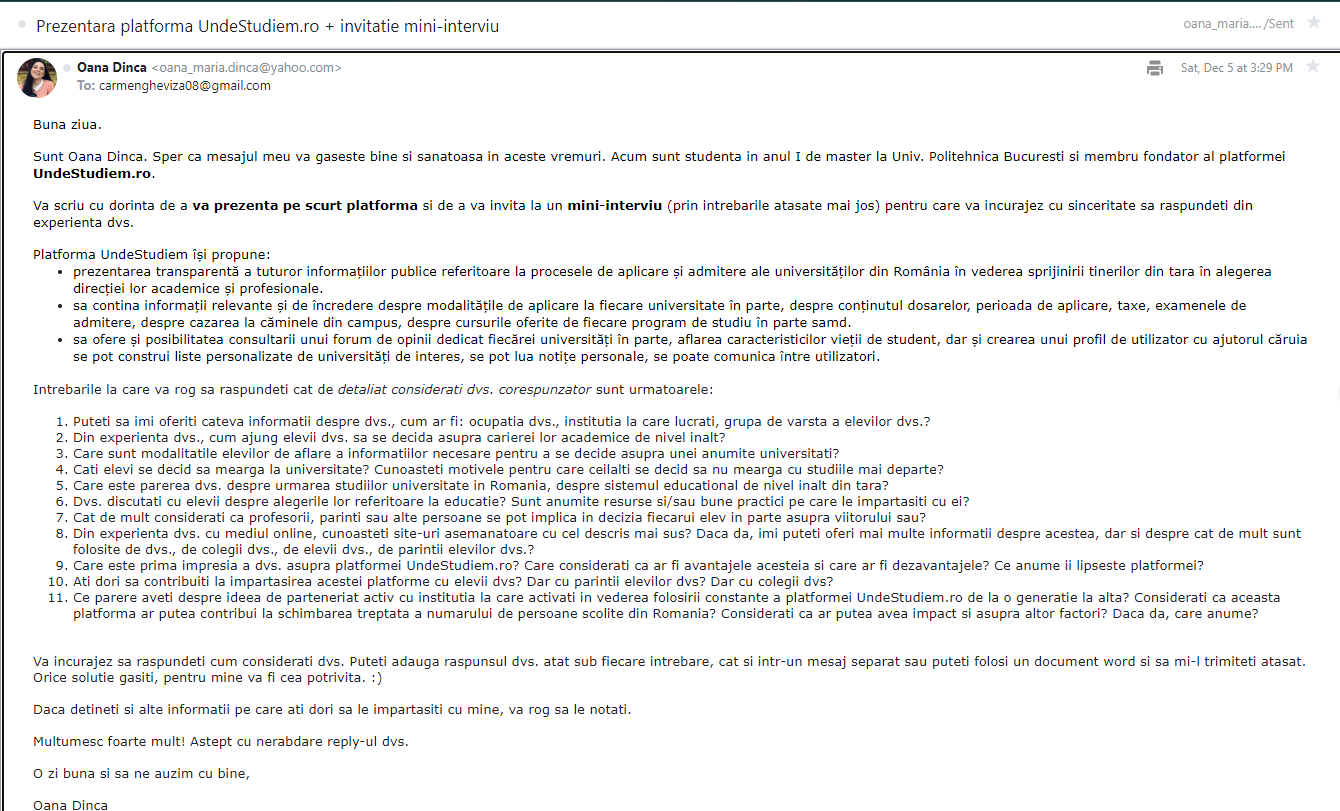
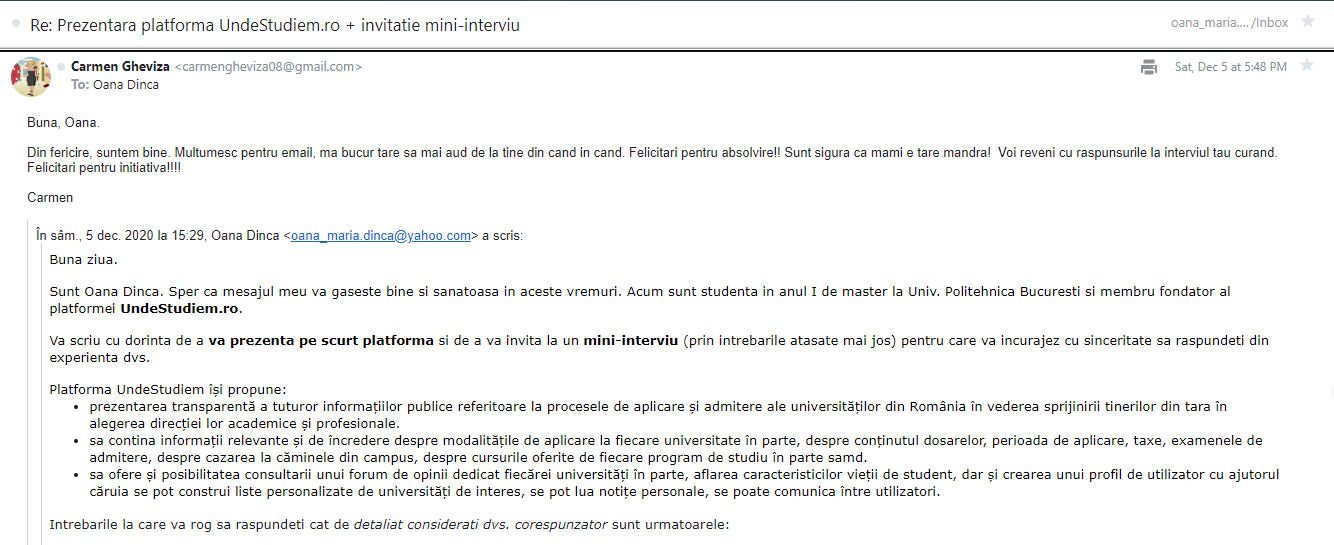
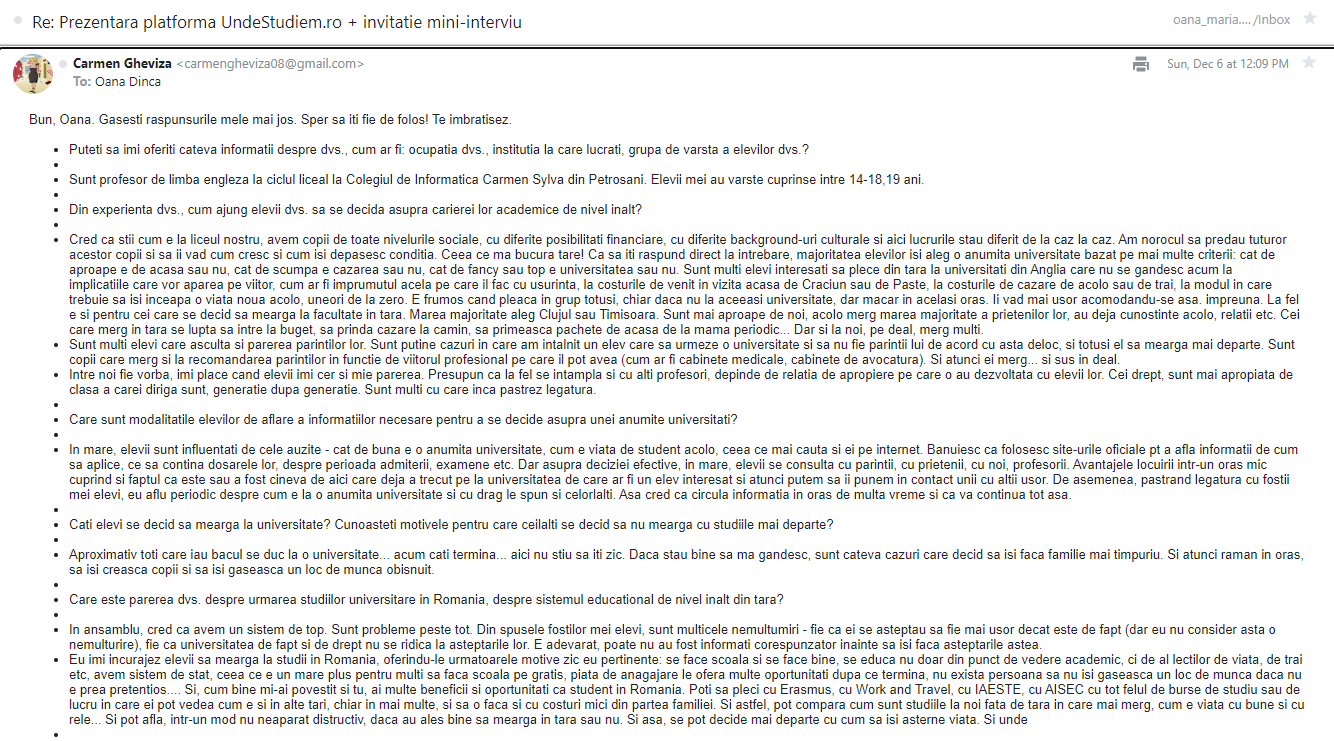
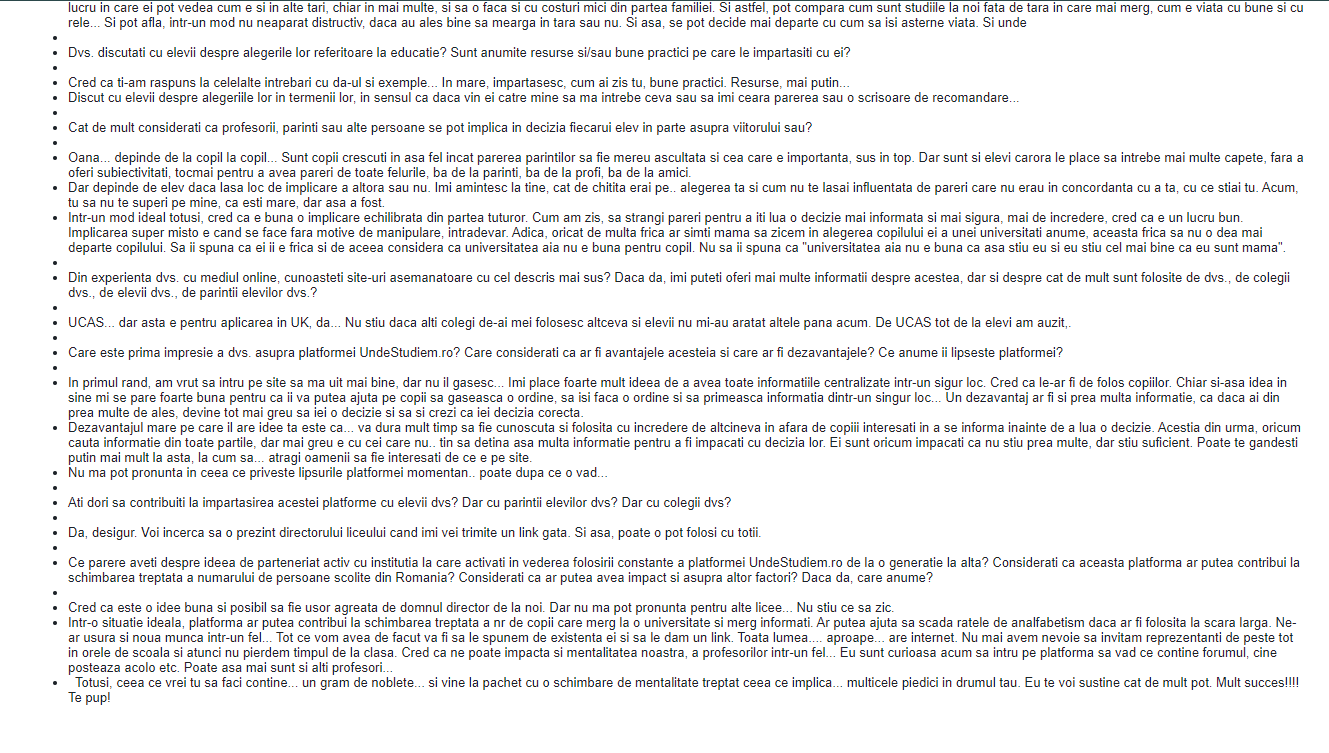
On 6 December, the landing page was shared on several student groups on whatsapp, private conversations on Facebook Messanged and as public posts on Facebook.

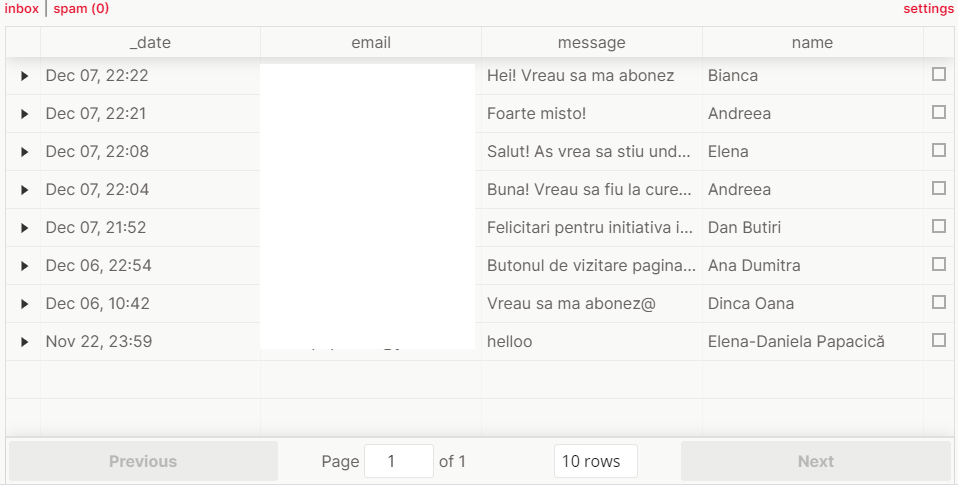
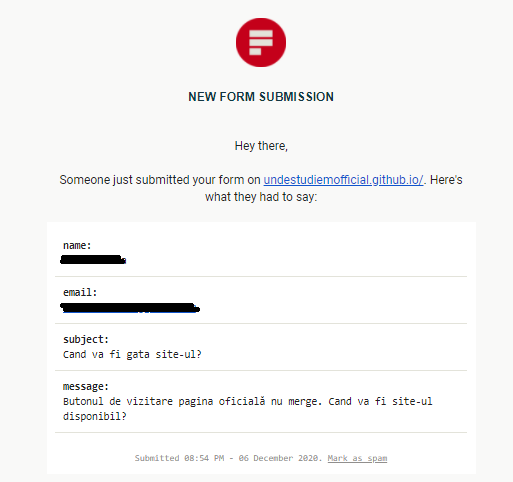
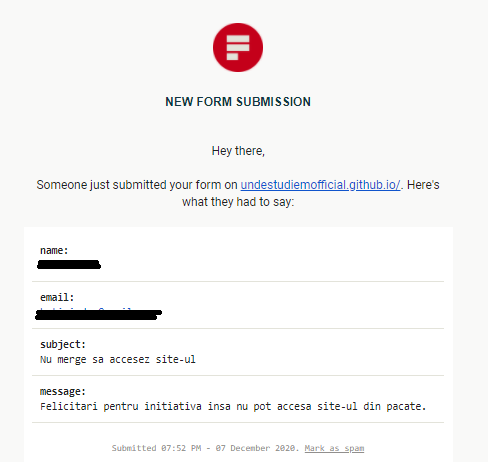
Using Formspree for lead collection we received messages from interested users
We brought people to our landing page through posts on social media and studied users behaviour using tools such as Hotjar and Google Analytics.
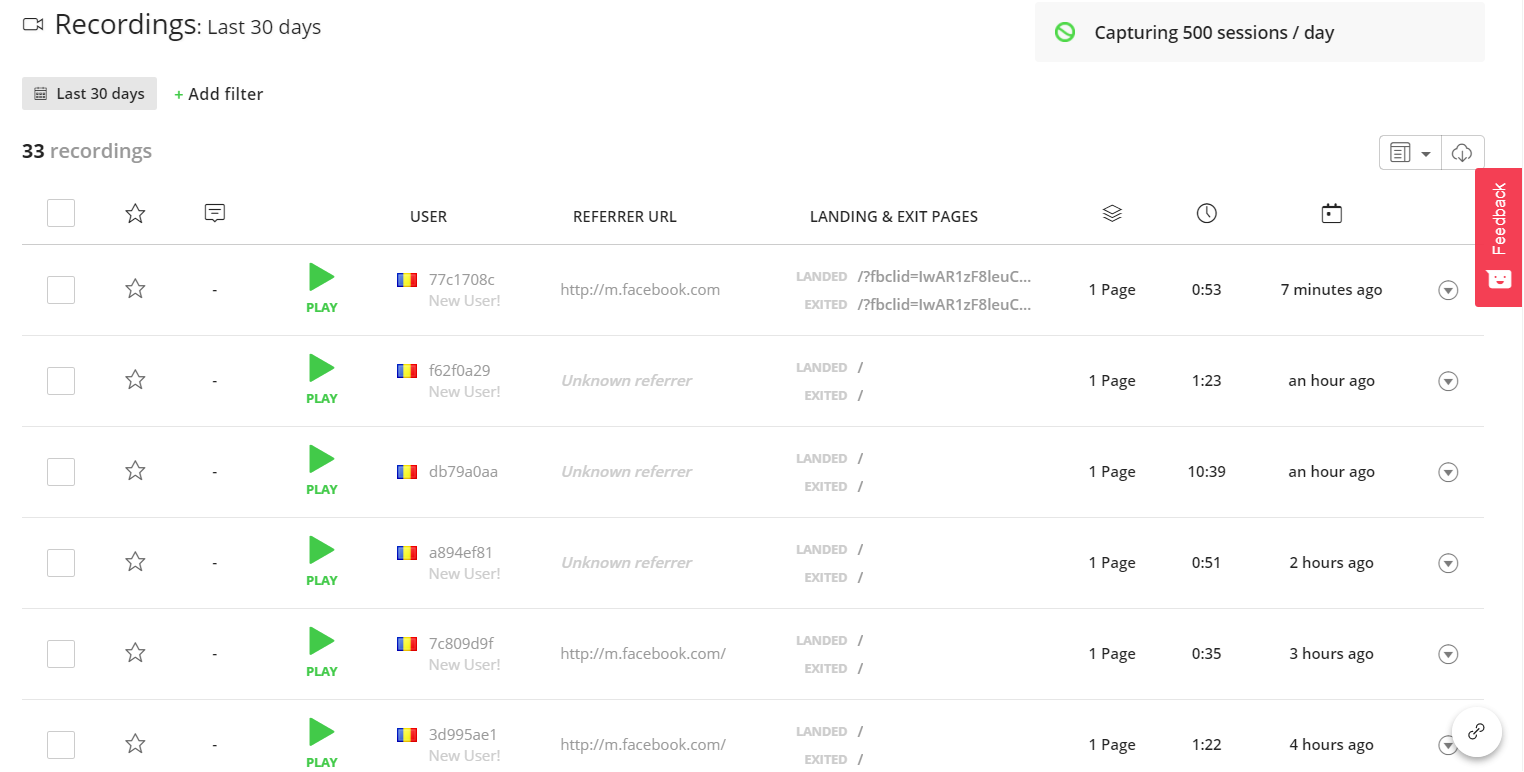
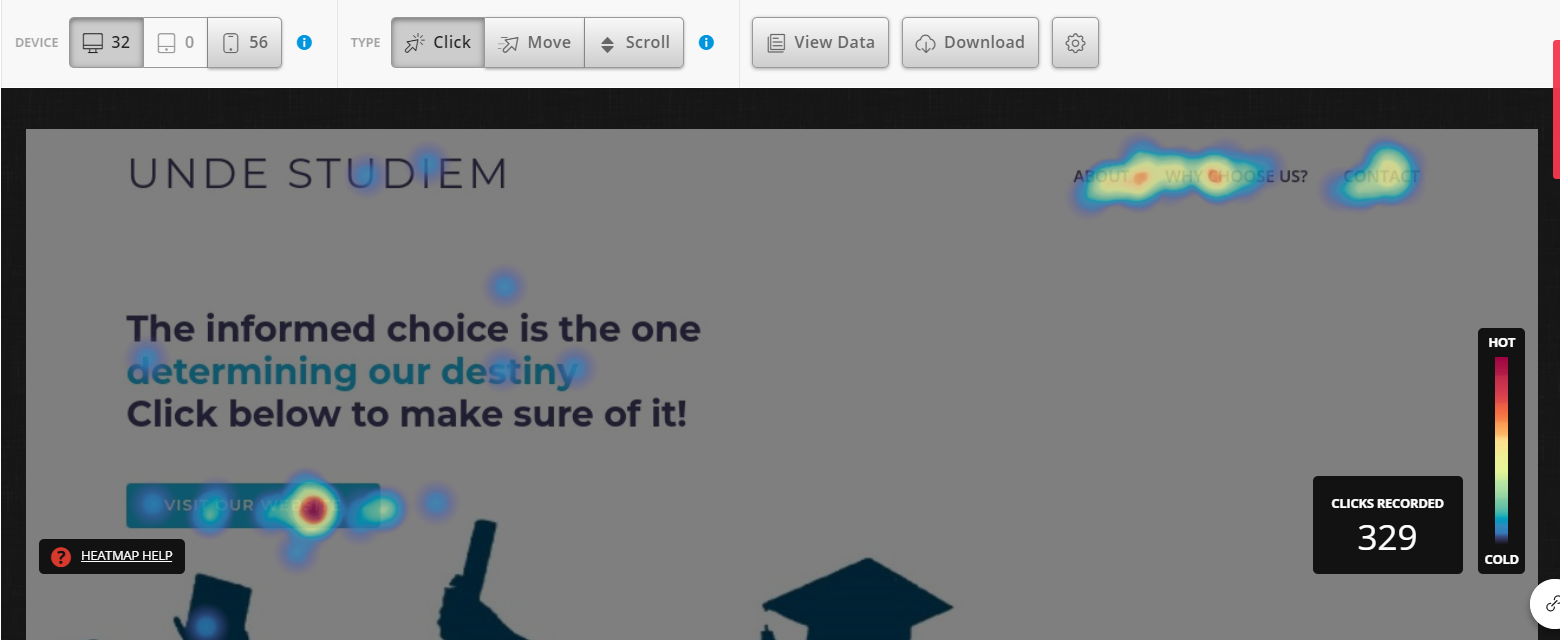
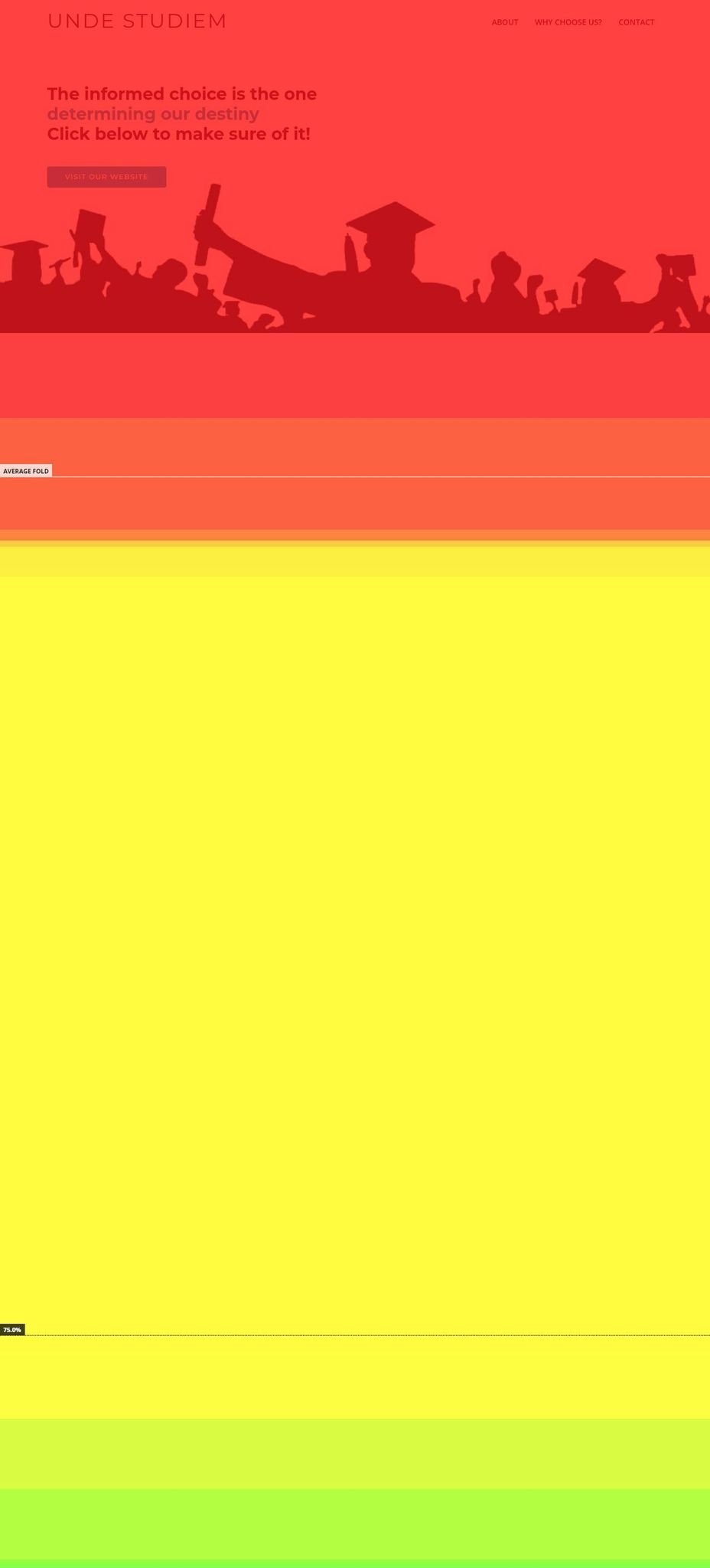
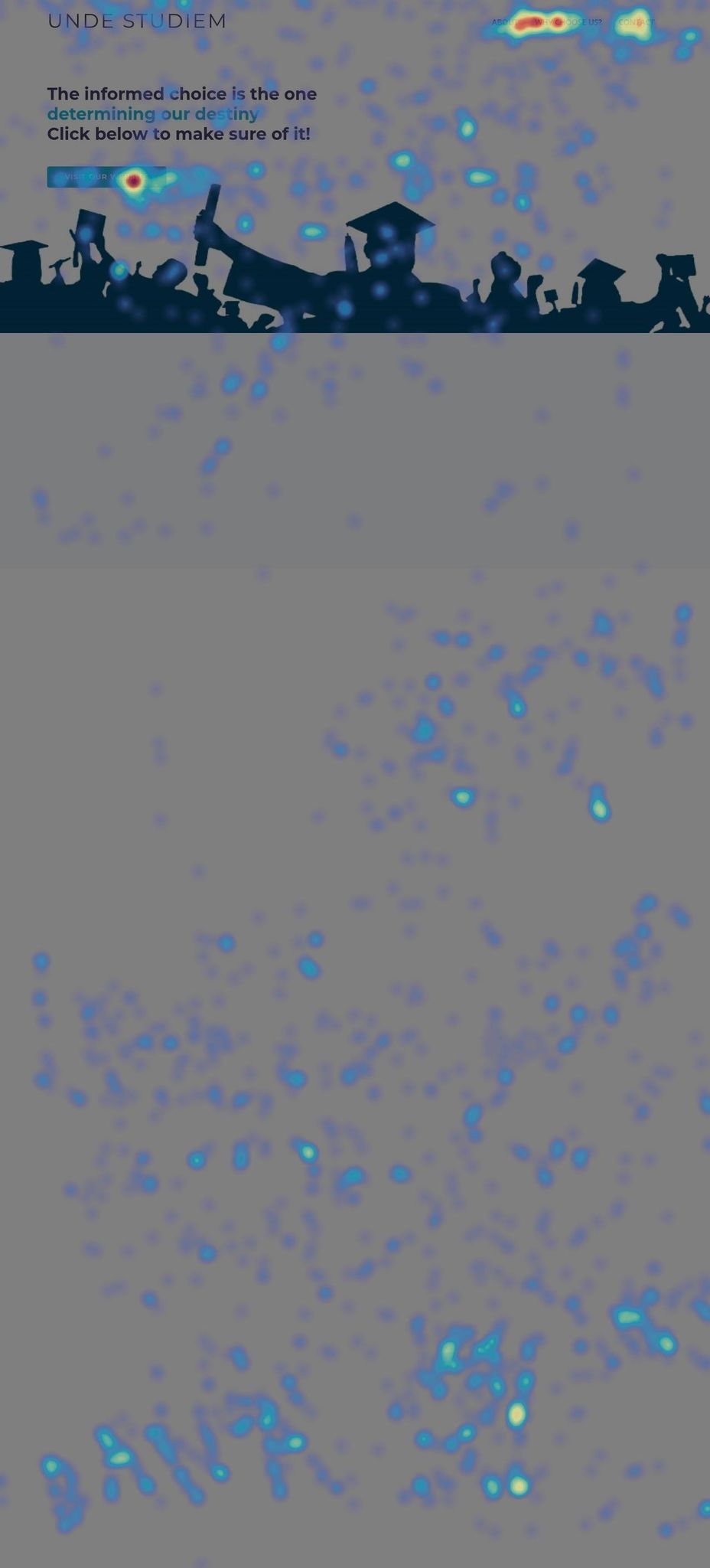
Whith Hotjar we created Heatmaps and records from 88 visits (56 from mobile devices and 32 from desktop). The final Heatmap suggests that the main focus was the button that should lead to the actual platform, whitch is a good sign - the users are indeed curious to visit our platform.
Next we used Google Analytics for gathering demographic and device data that could become useful in out research.
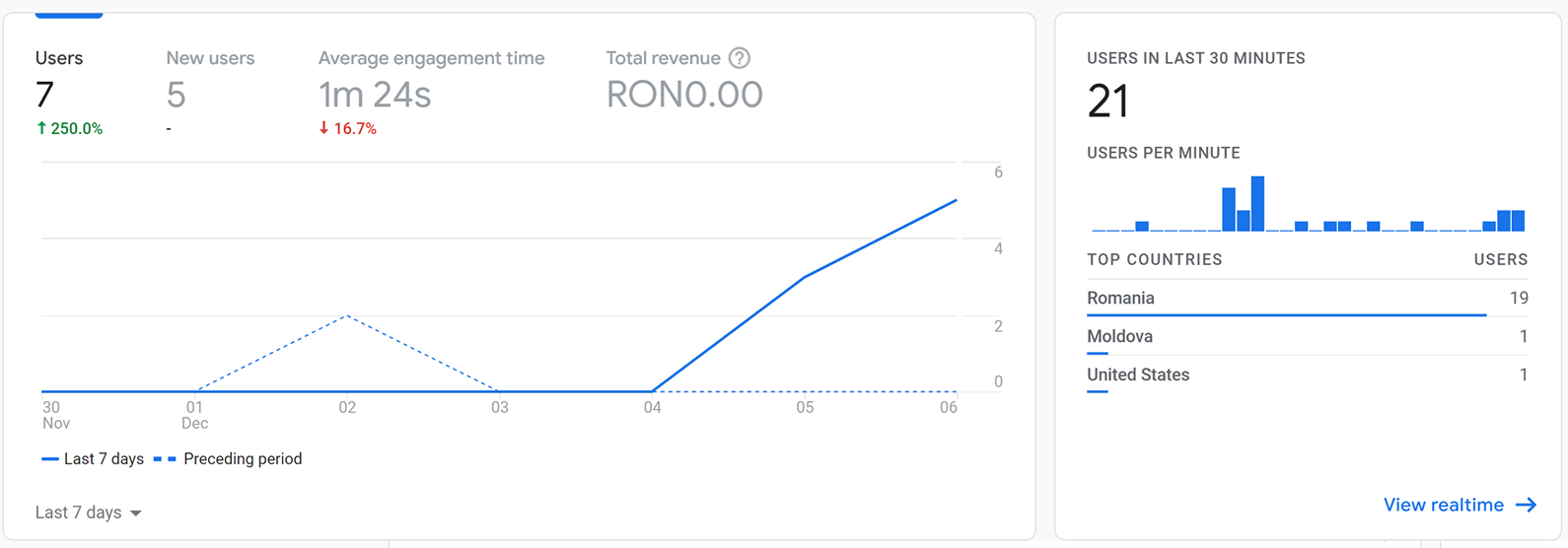
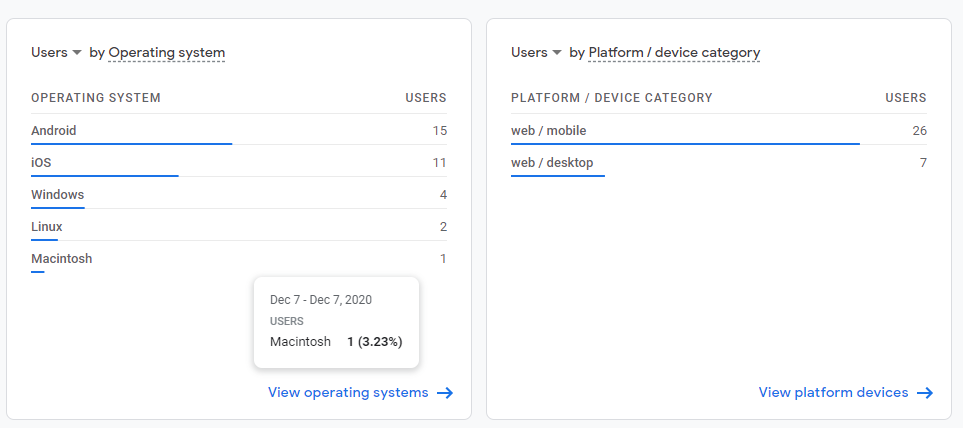
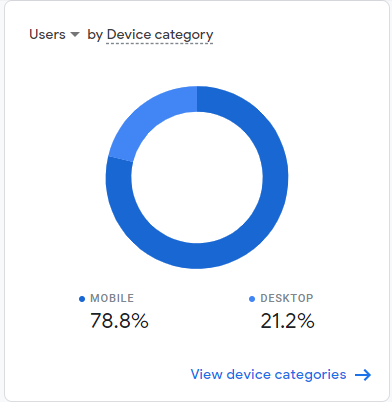
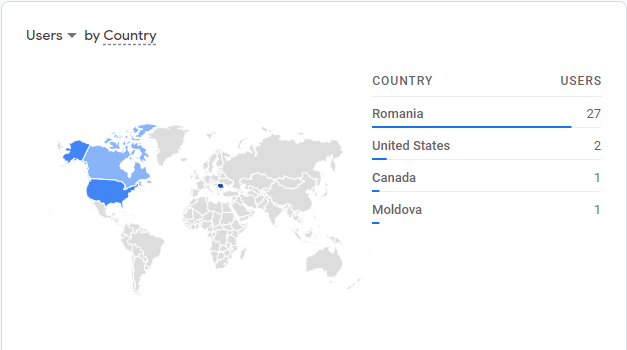
It's not a surprize that most of the users come from Romania, but what is interesting is that even romanian users that live outside the borders were curious to visit our platform, as the results above sugest. Most of the scores come from mobile users. This information should tell us that we should focus more on the mobile design for our platform.
Our target market is structured as follows: the high school students market - usually in their last year - who are trying to draw the lines of their future career by searching for information about the university admission process, future subjects, teachers, opportunities, and scholarships - making sure they are on the right footing. One of the other sub-markets is represented by undergraduate/graduated students that want to either follow a Master's Degree or Ph.D. or wish to pursue another Bachelor's Degree. Another market is represented by universities or teachers who are trying to promote their degrees and courses. We are targeting people around 17-24 years, but our age gap extends further, around 40.
Regarding the statistics, in Romania, there are annually around 140.000 high school students who will pursue a higher educational degree. There are over 500 universities and 520.000 students. 400.000 pursuing a Bachelor's Degree, 100.000 pursuing a Master's Degree, and 20.000 a Ph.D. program, as mentioned by the Ministry of National Education, Romania.
Our target market competition is distributed between 4 candidates:
A platform for school management, mostly for teachers, but used also by students.
A platform providing a non-academic League Table of the top Romanian Universities based on valid, unbiased, and non-influenceable web metrics provided by independent web intelligence sources rather than data submitted by the Universities themselves.

A platform providing a ranking of universities and generic information about graduated/undergraduate degrees.
A platform for students guiding them in university selection and admission, and also our main competitor.
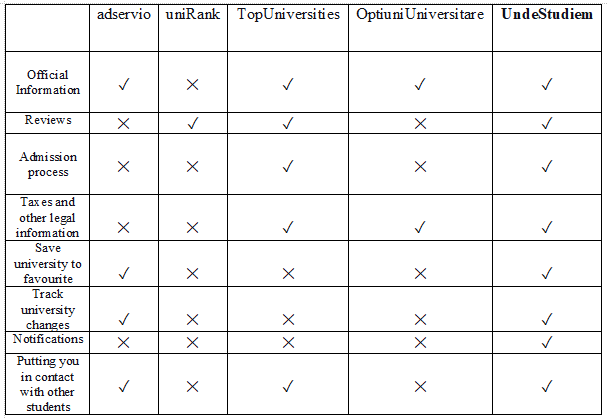
Since our main target audience are romanian high school students, we analyzed the website traffic of the competitors that present only content about romanian universities (Adversio and Optiuni Universitare). At the moment Adversio has the highest audience (less than 500k visitors in December 2020), but at the same time, Adversio is also dedicated to teachers and parents, not only teens. Therefore, more relevant analytics are the traffic results from Optiuni universitare (less than 50k users in one month). Optiuni universitare is also our main competitor, with the highest market share.

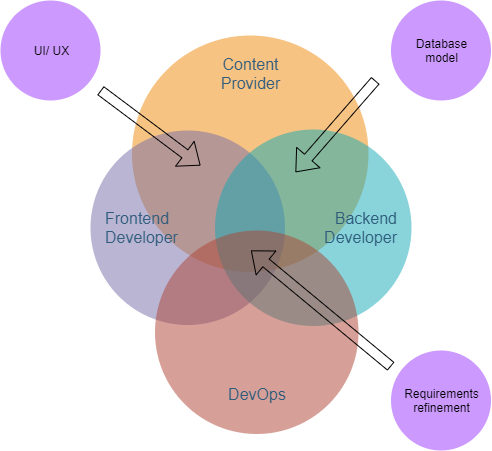
For the stage of coding, we decided to refine the team roles and split work as the following:
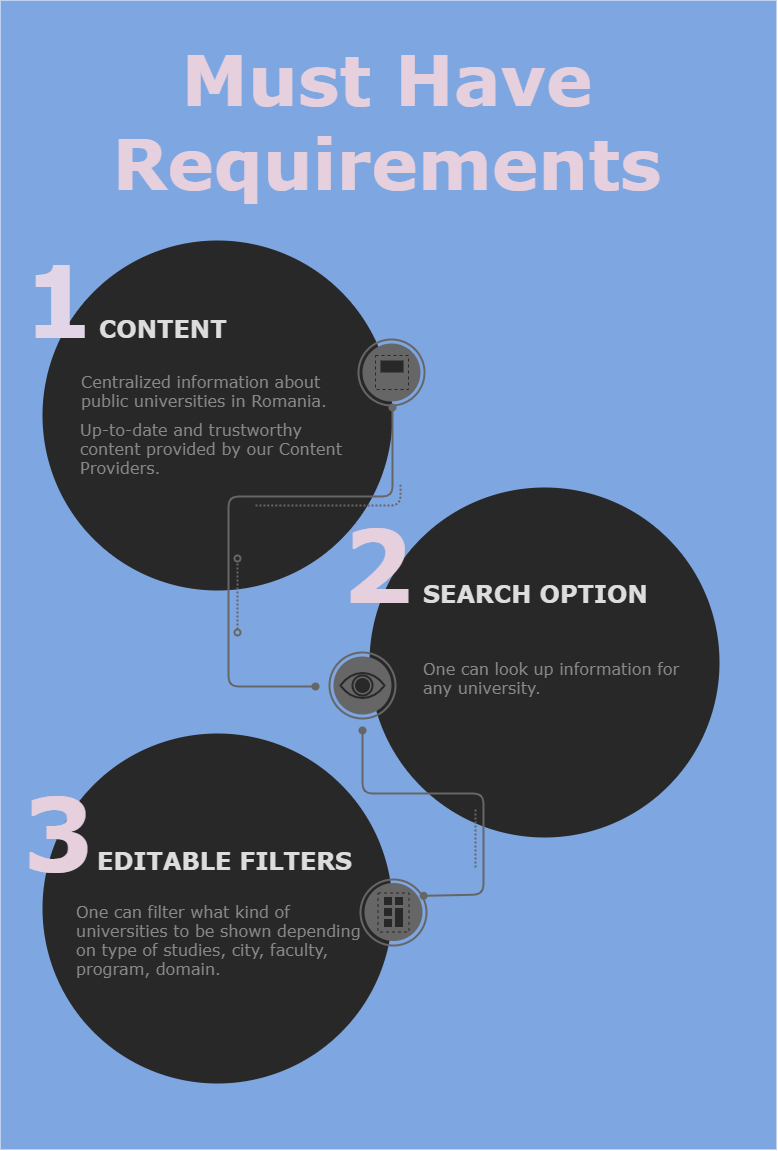
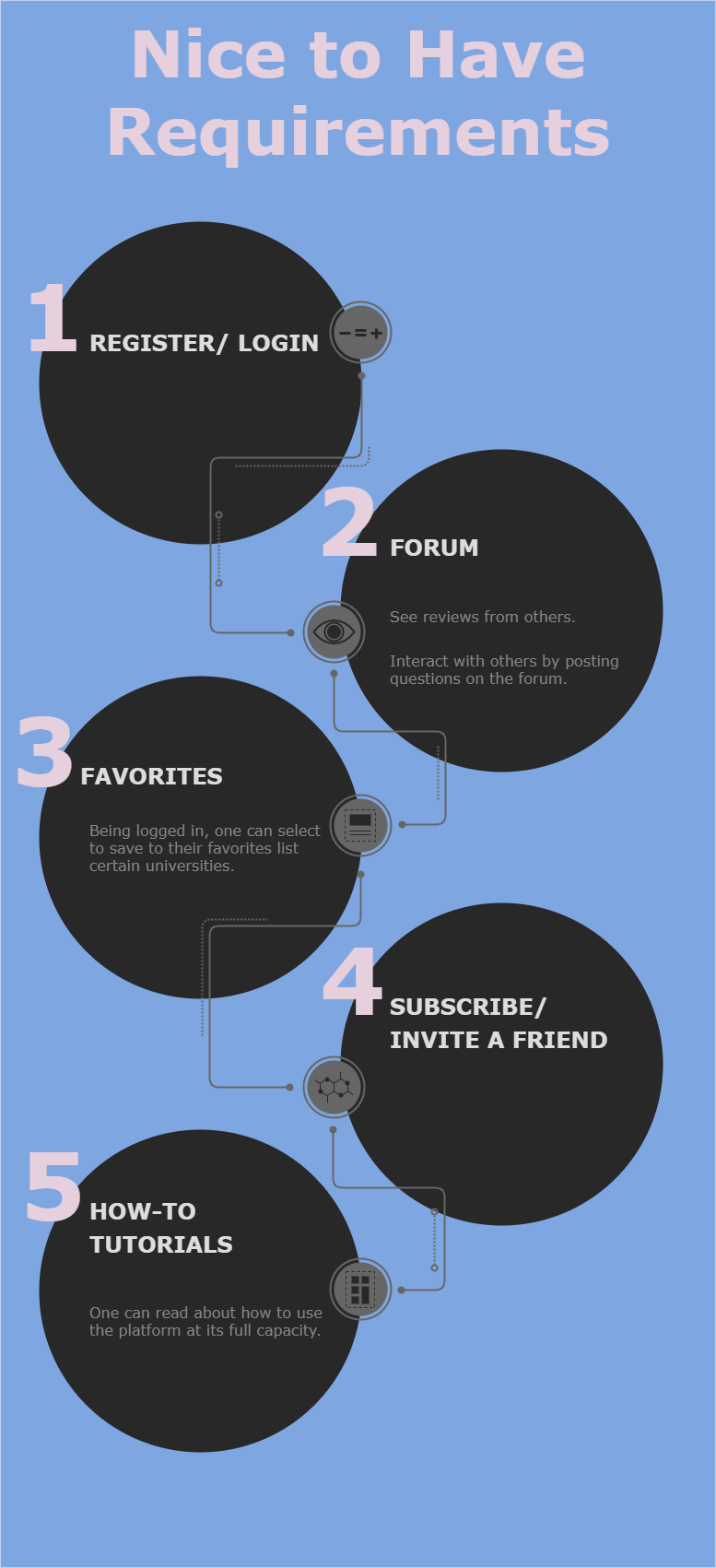
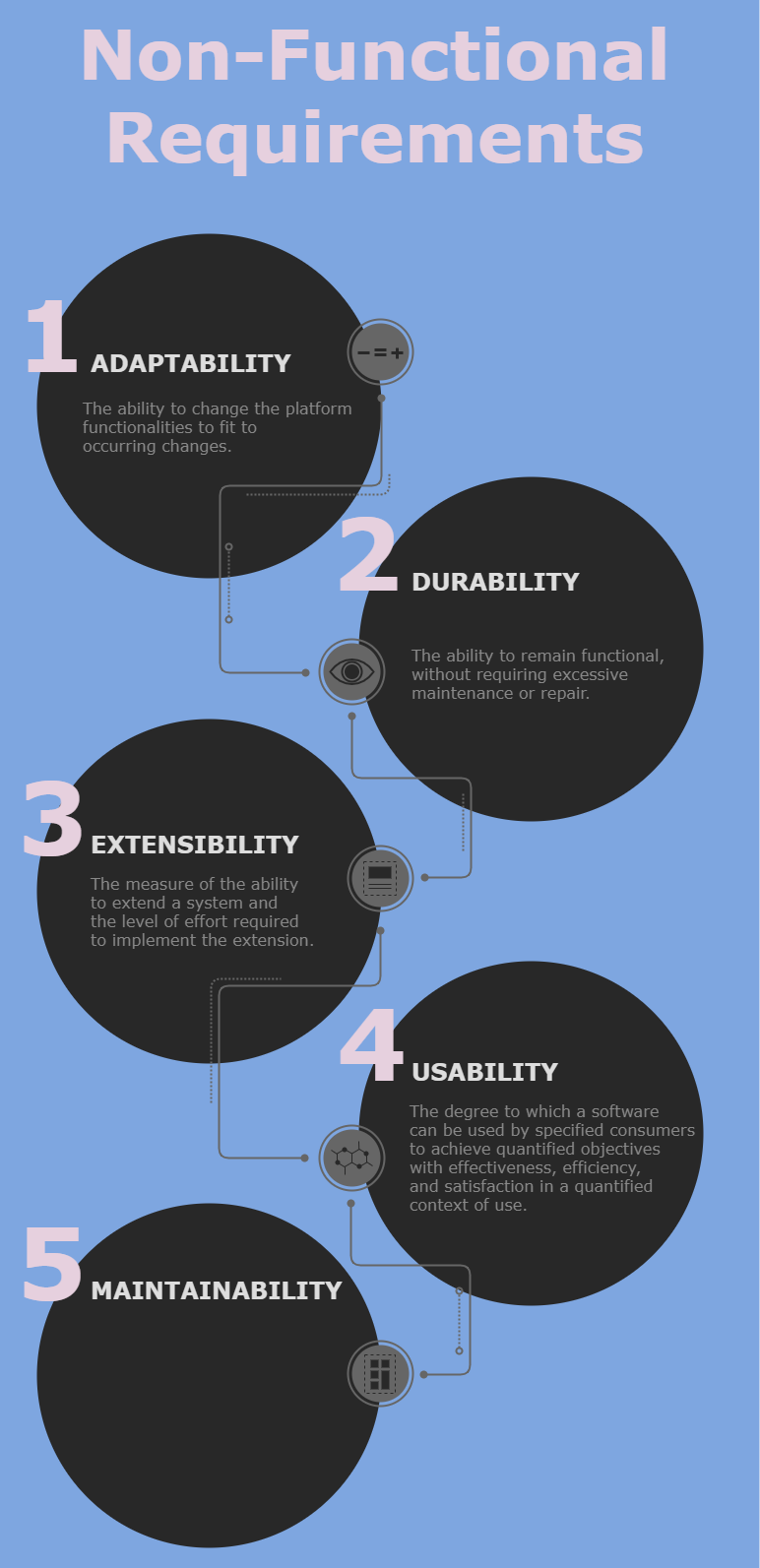
After incremental validations from M2, M5, and M6, our clients required that our product should contain certain features. We divided them into two categories: MUST HAVE, NICE TO HAVE and NON FUNCTIONAL requirements. Here they are:
Based on the previous validations feedback, our prototype is in Romanian. We kept a straightforward interface and we also added a website review button: "Da-ne feedback!" (we will talk about that later).
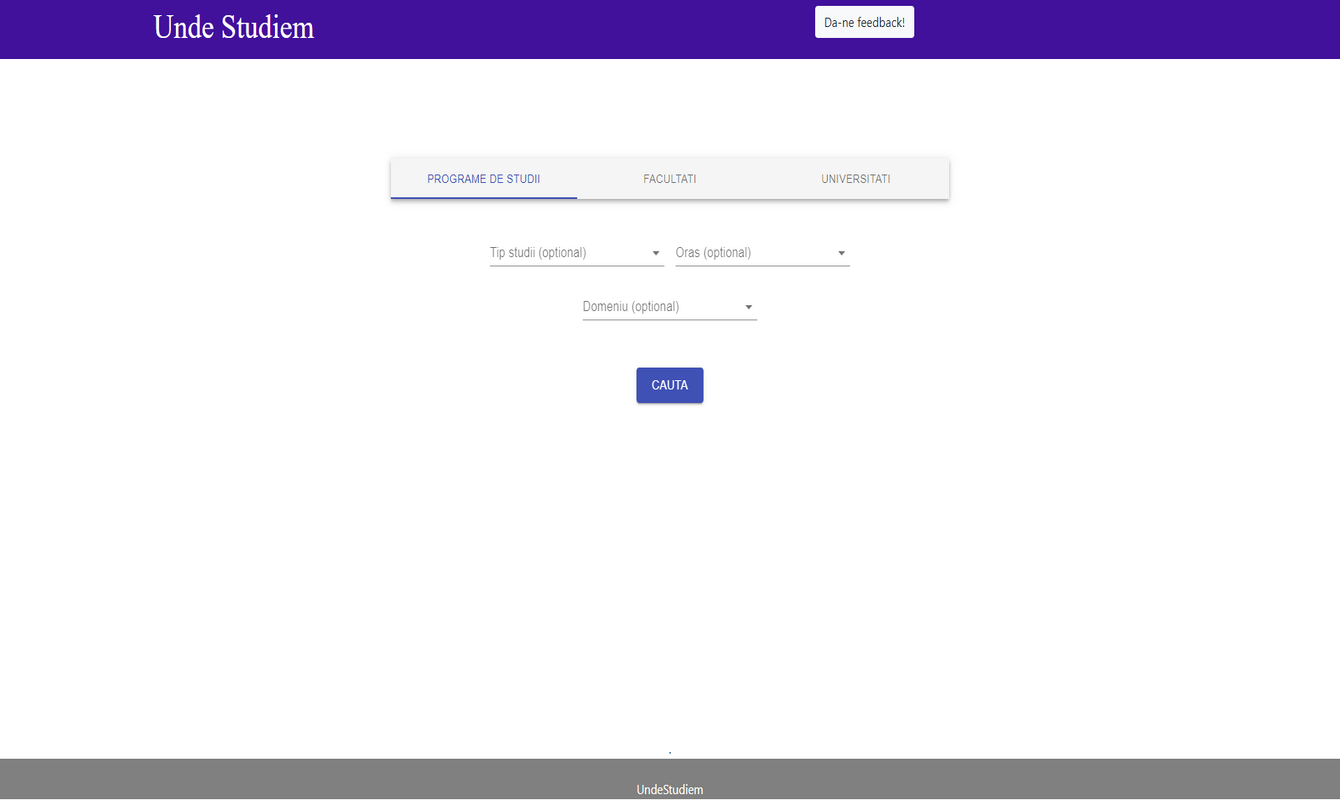
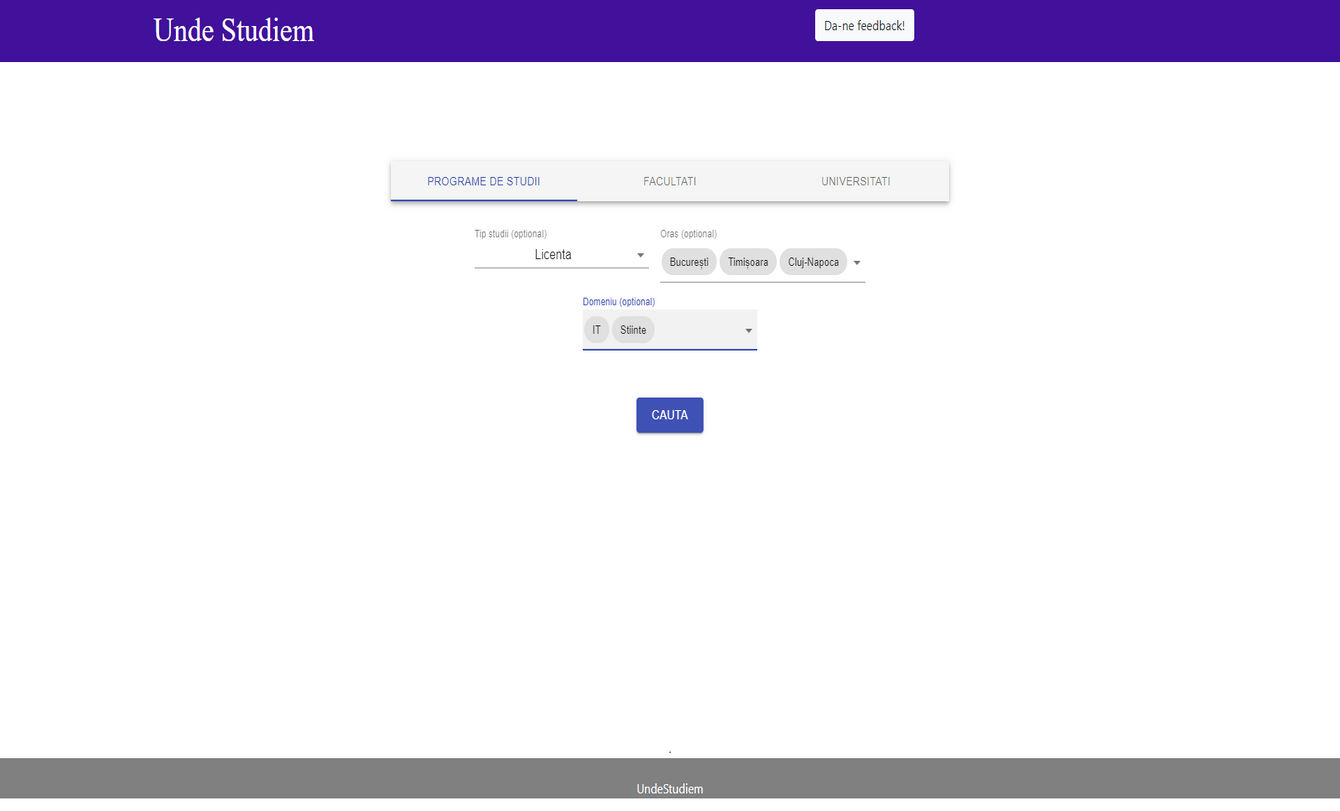
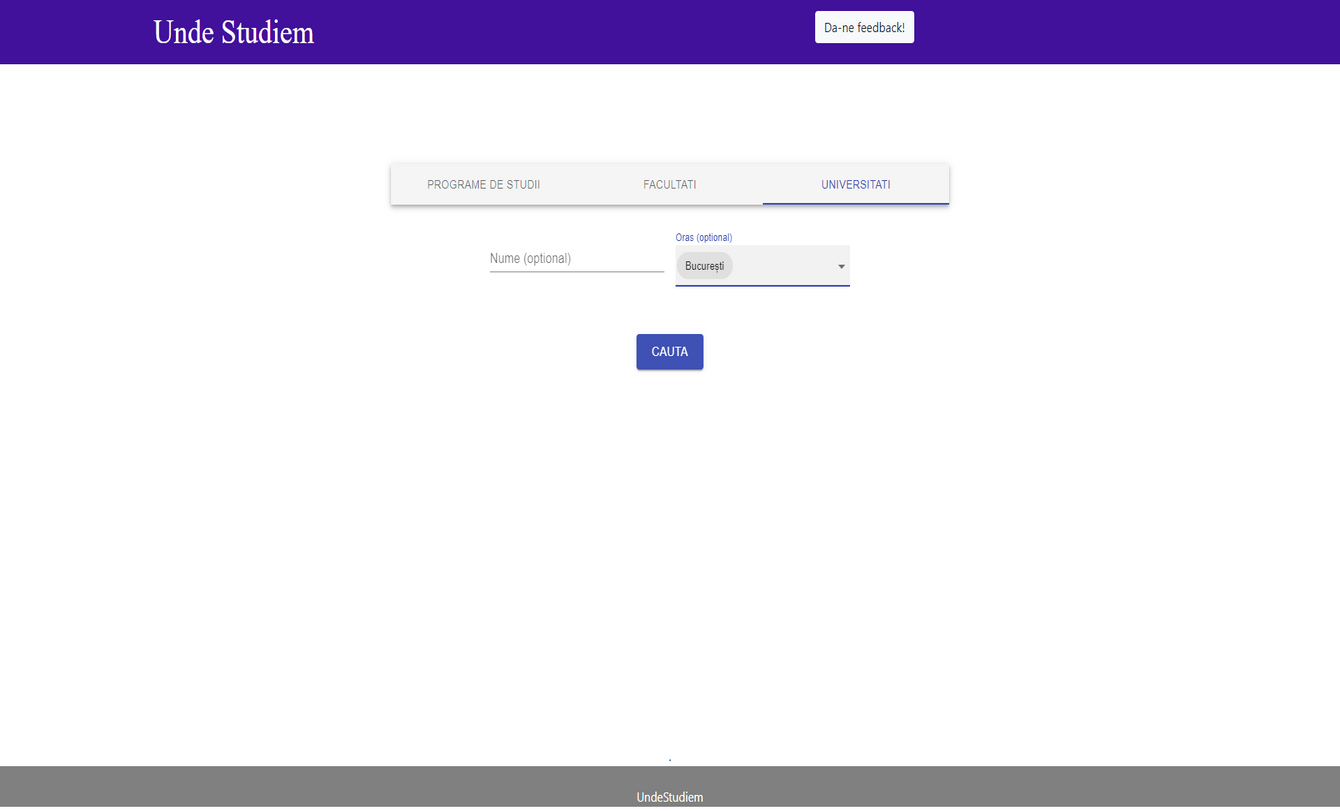
Our search page allows you to search in 3 categories: "Programe de studii", "Facultati", and "Universitati" - each one with its own different filters.
As requested by our customers, the MUST HAVE feature of search filters - and the editability of them - were two of our main focuses. We want to give our customers the experience they deserve!
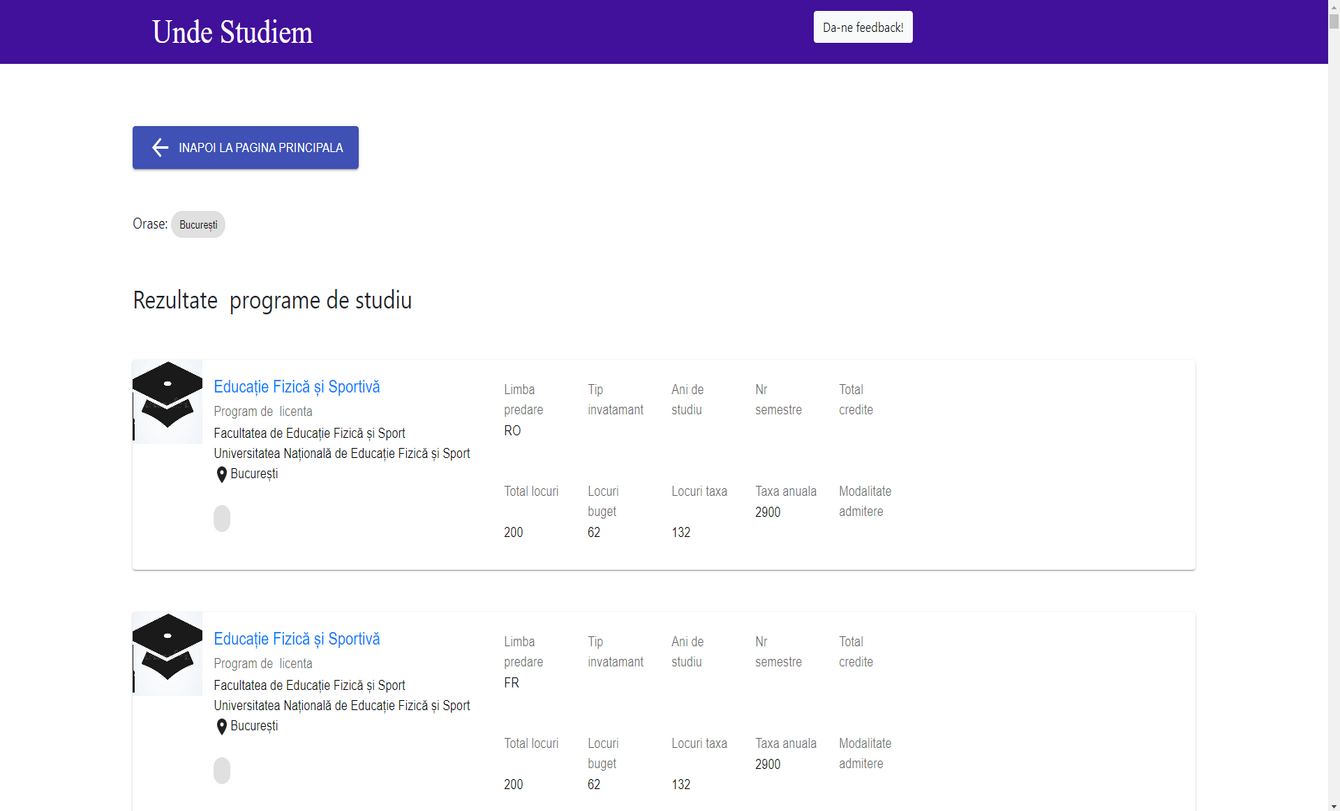
After resolving the search query interrogation, the platform displays all the entities that satisfy the search and also the filters. Each displayed element will provide some relevant information about the entity in the discussion.
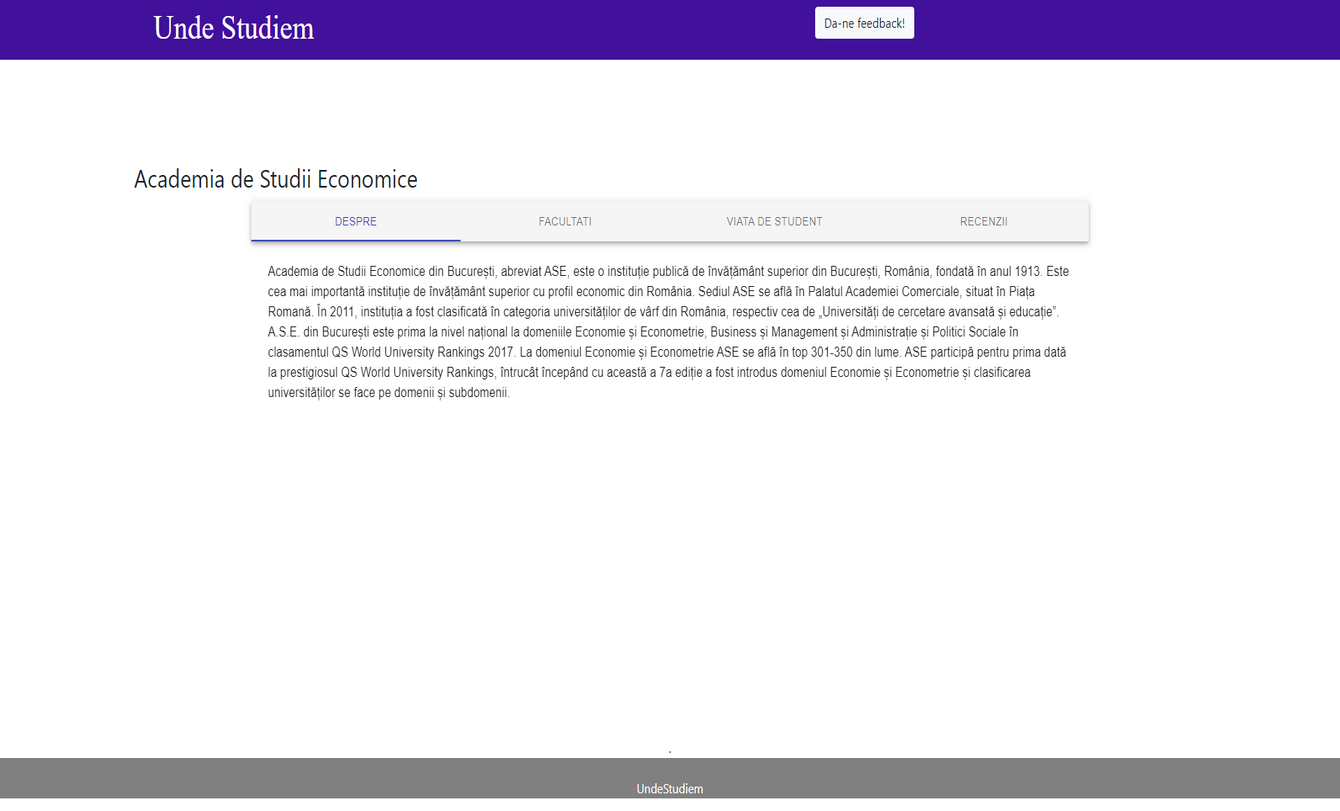
Once clicked, the university, faculty, or faculty program, will provide you extra information, including insides about the student life, courses, admission process, and so much more.
We included information about 30 public universities from Bucharest and Cluj-Napoca, having 149 faculties with 932 study programs for bachelor and masters. For some universities, we included a list of reviews as per the last picture show.
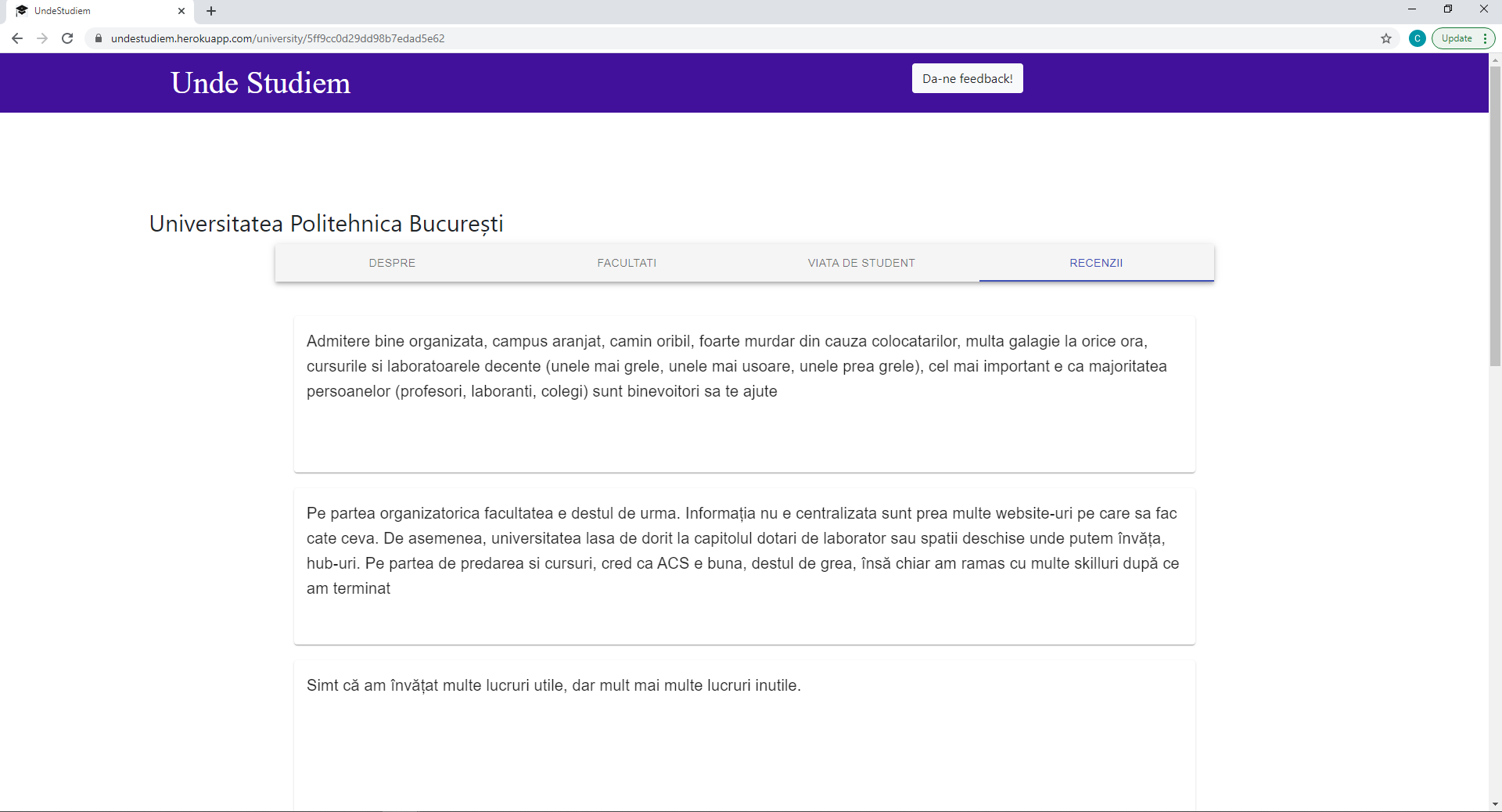
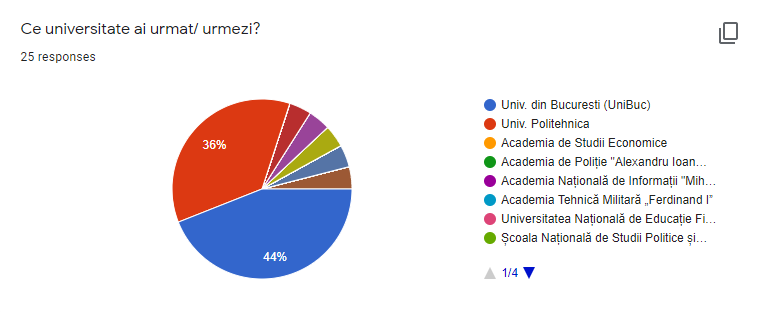
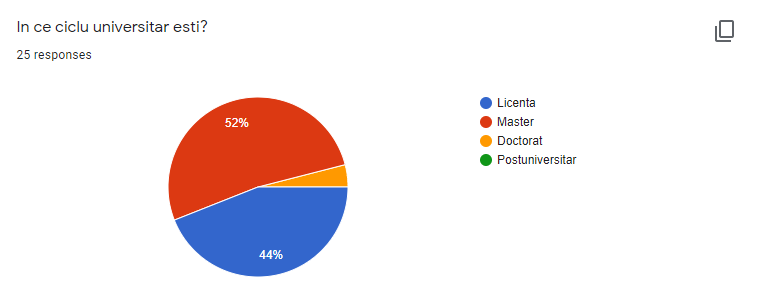
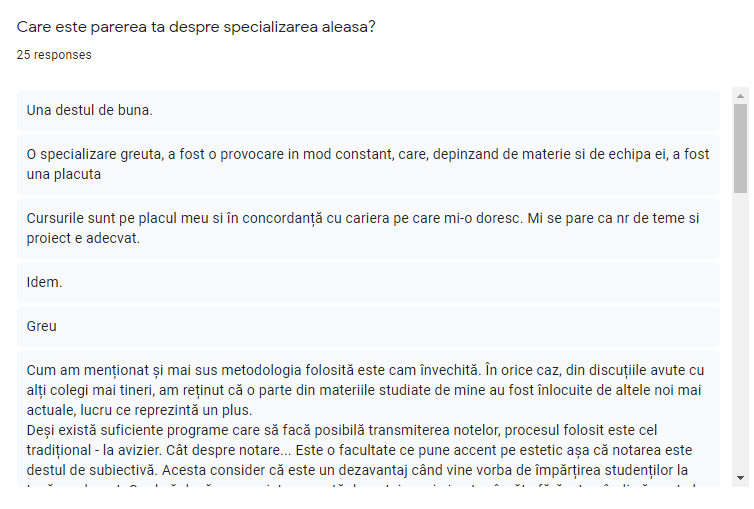
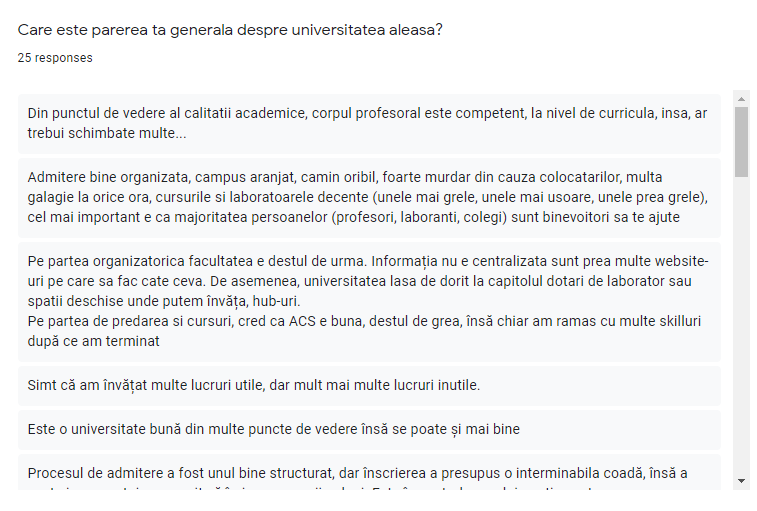
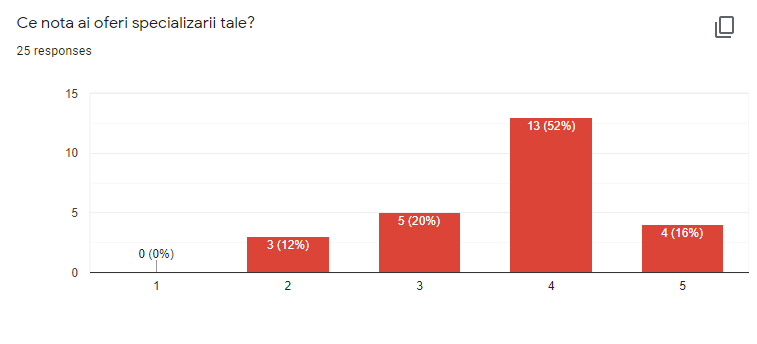
With the help of another Google forms, we gained 25 reviews for certain universities that can be found on the platform.
We started to promote our product on the usual groups, to the known interested people in it and to our 82 pre-subscribers list (to whom we send the below mentioned email).
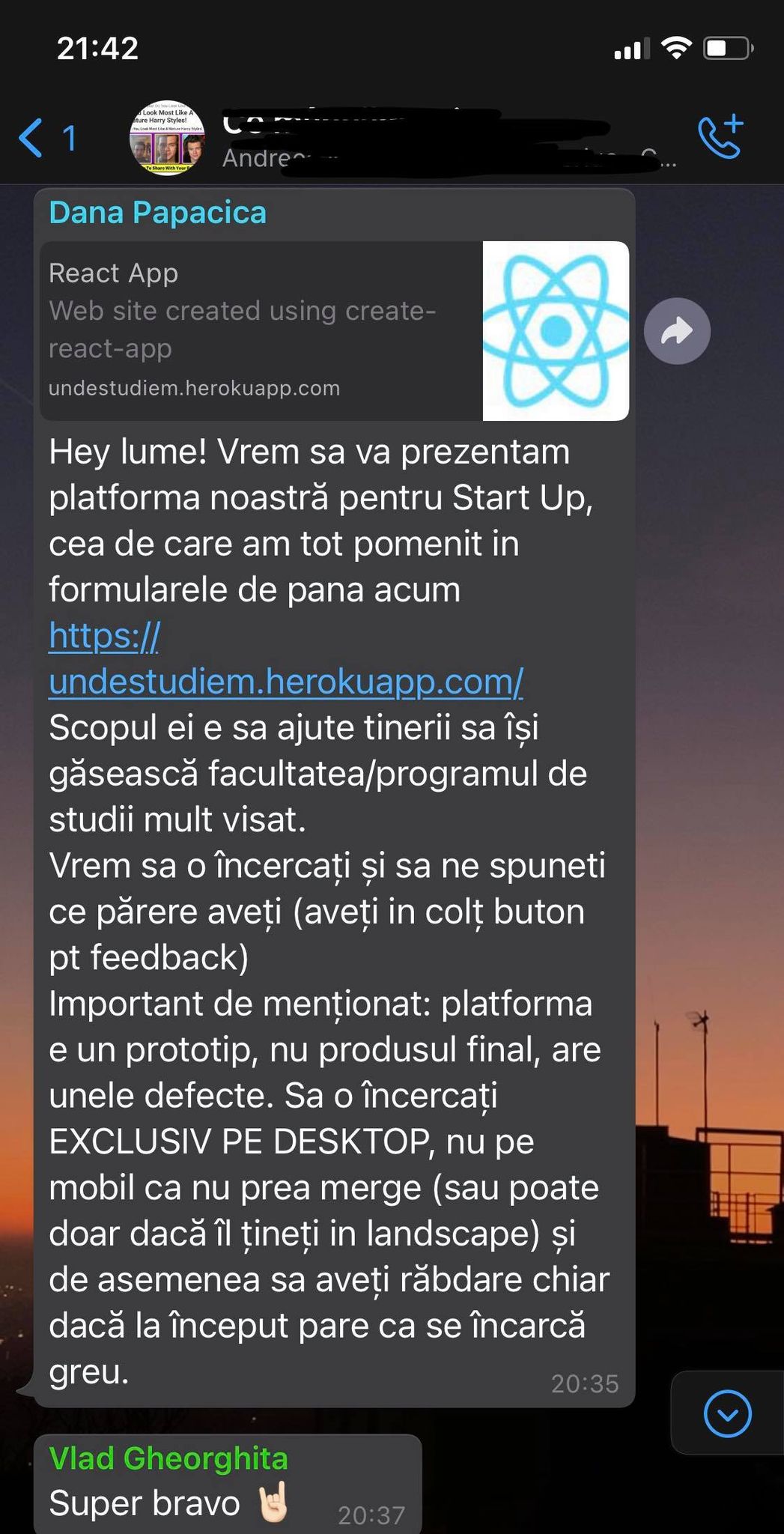
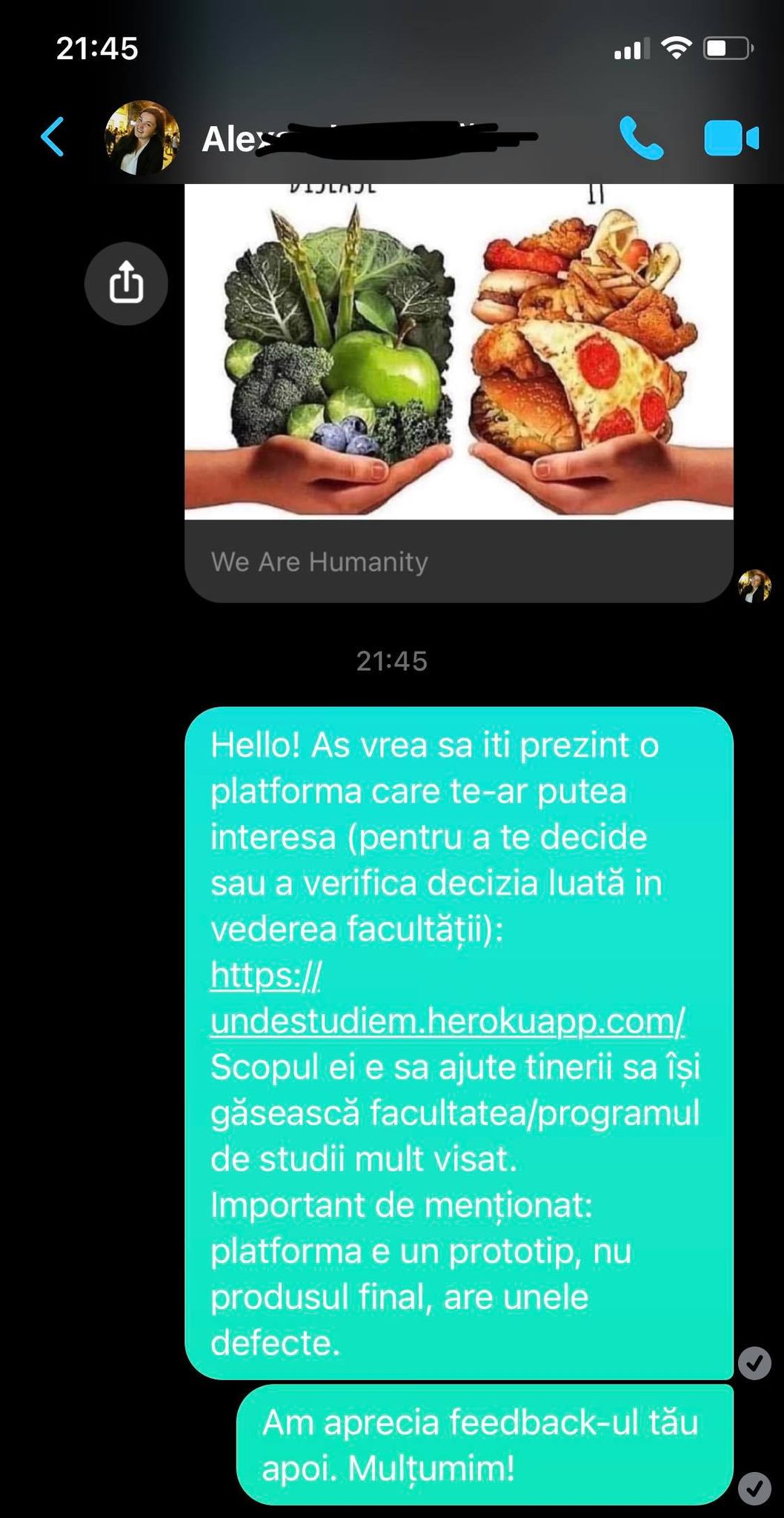

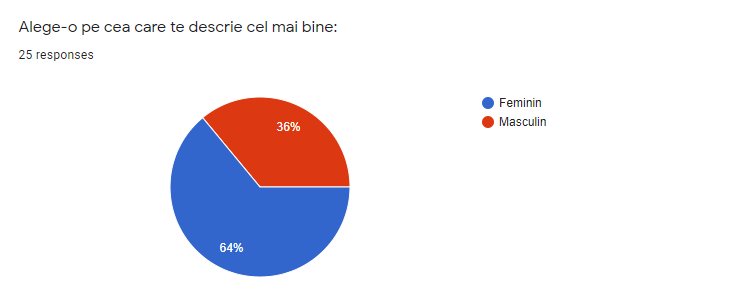
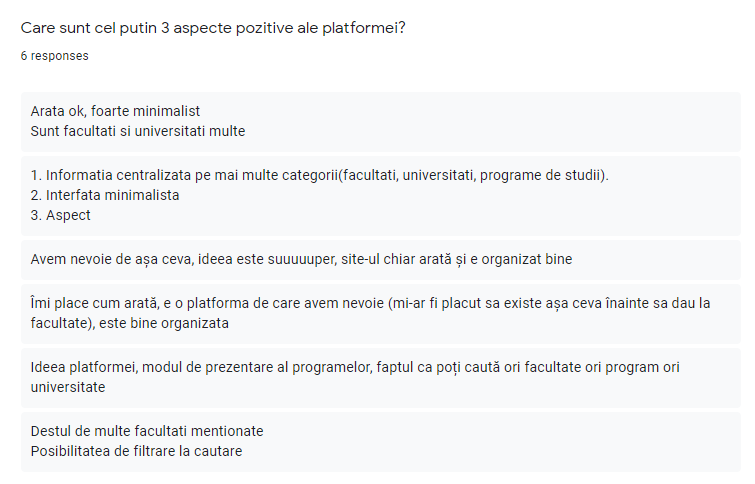
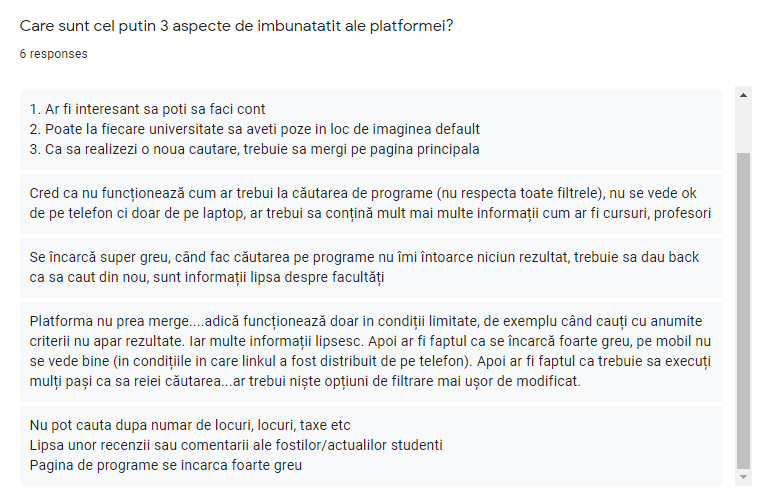
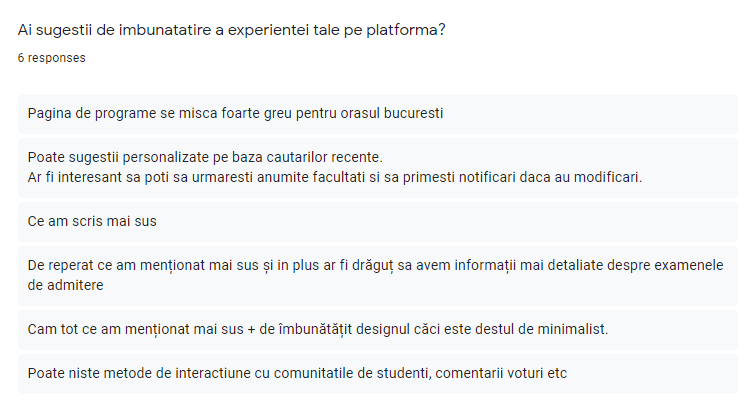
The feedback form that can be found on the platform contains the following:

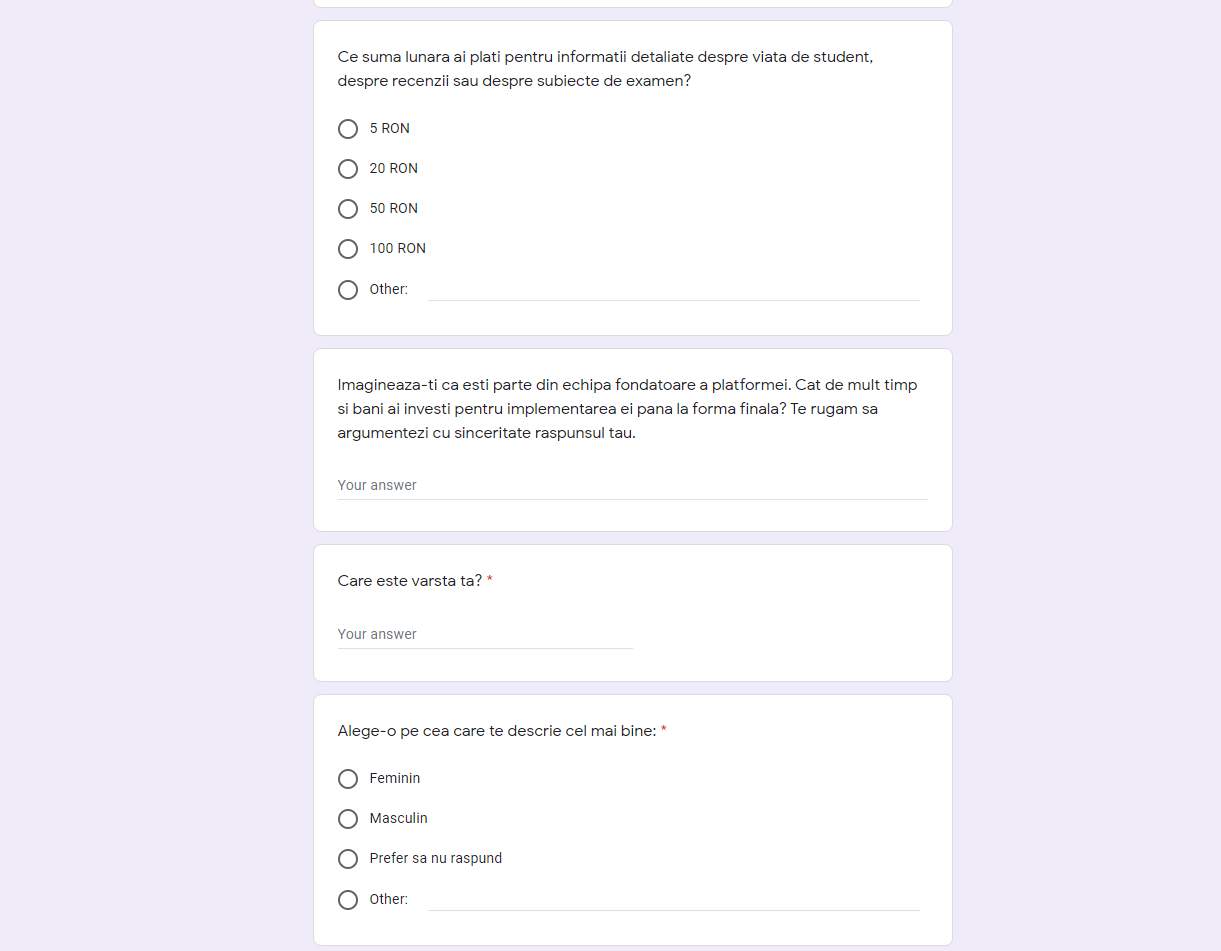
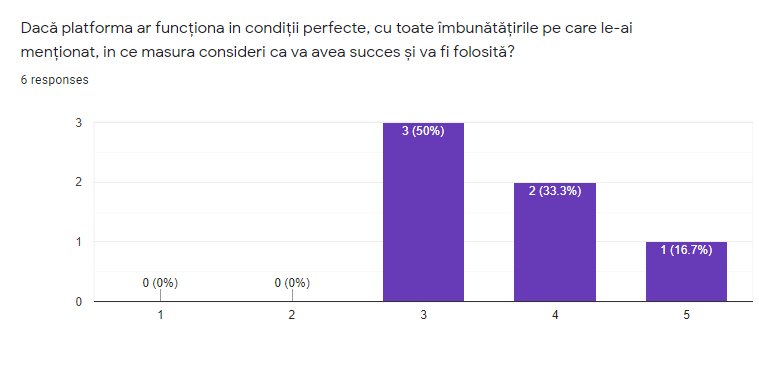
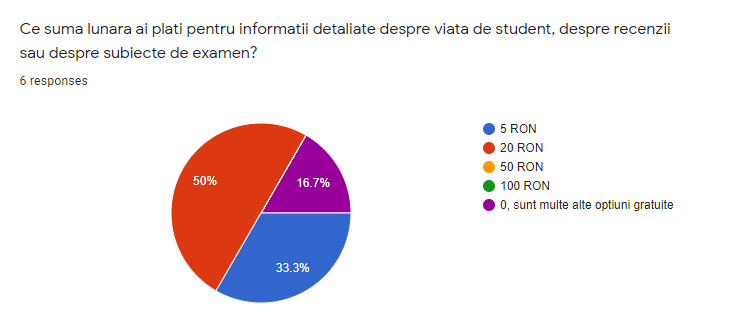
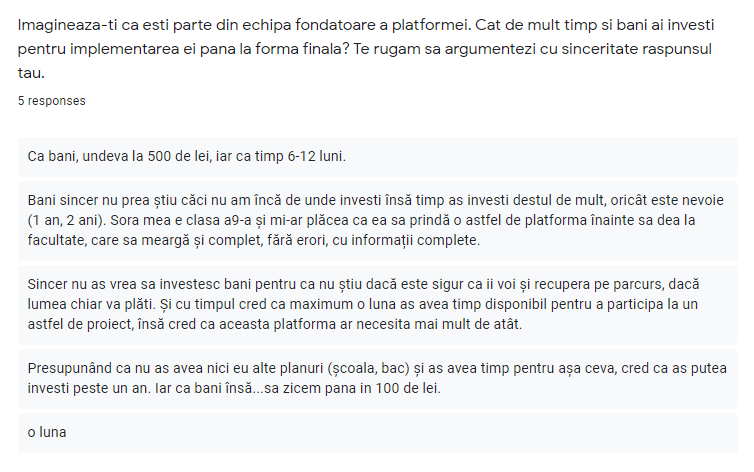
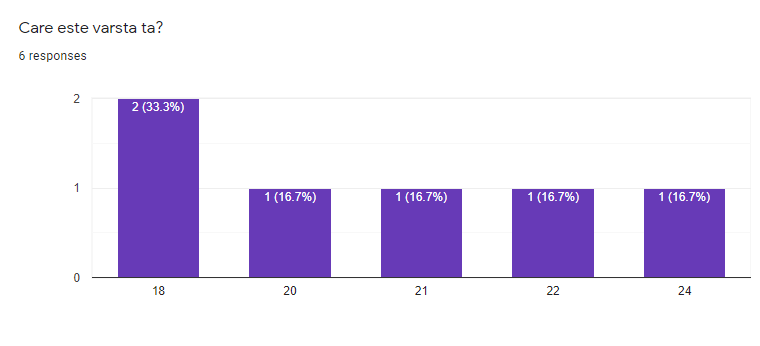
Although we didn't share the platform for long (only 3 days before the deadline of this milestone), we gained 6 responses from people aged between 18-24 years old. They find our platform really useful, they believe the idea of centralized information is a positive aspect of it, but they got annoyed by the waiting for the pages to load, the lack of navigation on the platform, the lack of interaction with others. However, they consistently request more reviews, for all program if possible, and some of them would still pay for the final product.
As we can see, most of the suggestions include the poor quality of the website - something that we were expecting, being aware of it. One perspective of this that we can take is that people are interested in the final version of our product, with better UX and more content.